This page is the hub for learning the fundamentals of drawing. If you're completely new to drawing, the
lessons here will help you build the core habits and techniques that support all forms of visual art.
Each video focuses on one essential skill that artists use every day. You'll learn what supplies you
actually need to get started, how to sharpen your pencil properly, how different pencil grips affect your
marks, and how to build a consistent drawing practice.
Drawing doesn't require expensive materials or complicated tools. In fact, you can begin with something as
simple as a pencil and a sheet of paper. What matters most is learning how to observe, control your marks,
and develop good practice habits.
These lessons are designed to help you develop confidence with your tools and your linework before moving
into more advanced topics like gesture drawing and figure drawing.
They also support something many beginners worry about too early: style. If you are wondering how to
build your own visual voice, read
How to Find Your Art Style.
Strong style usually grows from fundamentals like observation, control, and repetition.
If you're just starting out, begin with the Supplies lesson and continue through the videos in order.
Together they will give you a solid foundation for drawing practice and prepare you for the next stage of
learning.
Start your first drawing session
A simple sequence to help you loosen up and understand basic shapes
No signup required. Just press play and draw.
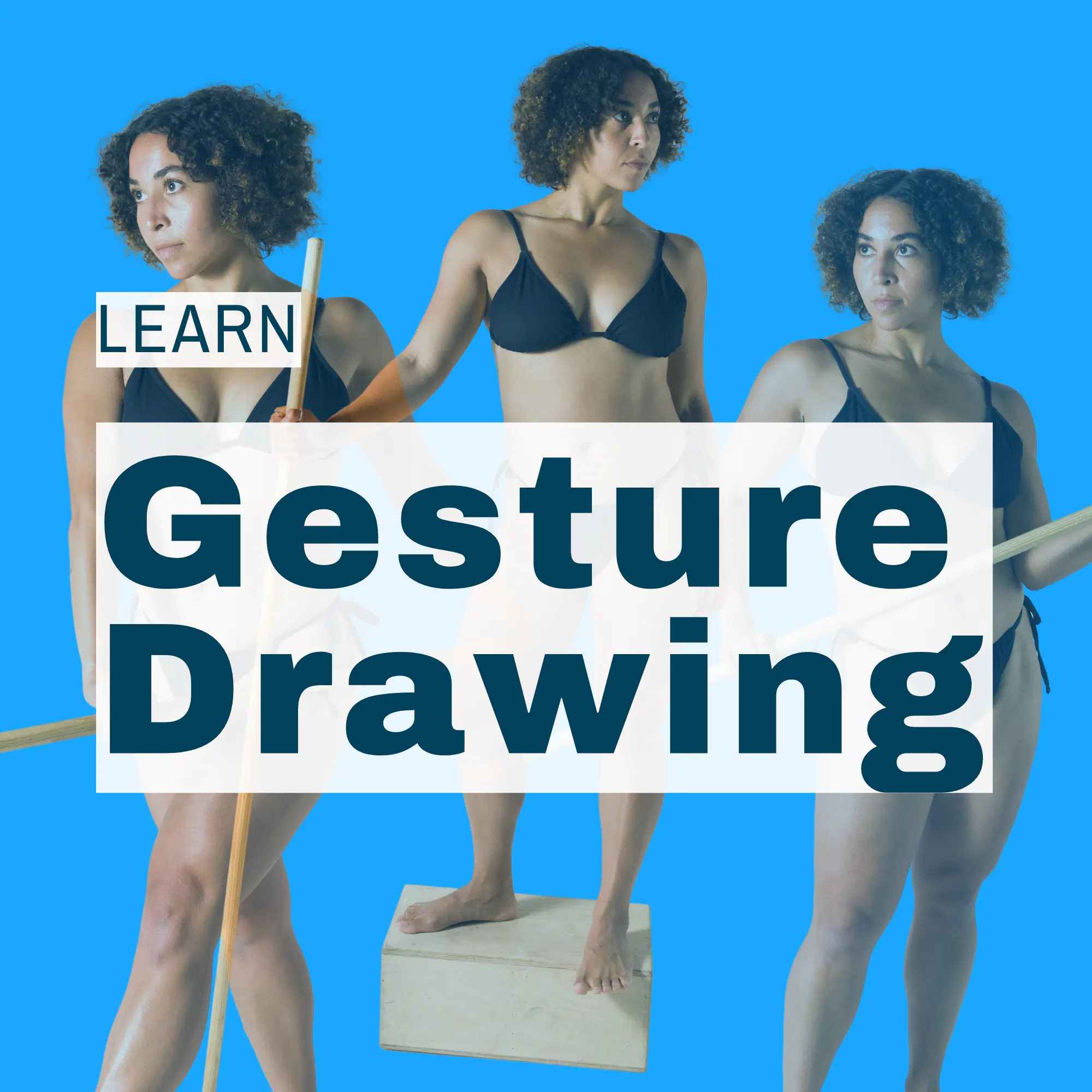
Gesture Drawing Playlist
Supplies
You can get started with just a pencil and blank paper-no need for fancy tools.
Graphite pencils, such as HB, are great but have limitations in range and finish.
Alternative drawing pencils, such as Derwent Drawing Ivory Black, Conte, Wolff's Carbon, and Blackwing 602, offer a wider range of values and textures.
Newsprint or regular printer paper is ideal for practice; sketchbooks help keep your work organized.
No erasers are needed in the early stages-learn to draw lightly instead.
How to sharpen your pencil with a blade
Using a blade to sharpen pencils yields a longer, finer point ideal for shading and broader strokes.
Selecting a sharp and comfortable blade is crucial for both safety and precision.
Hold the pencil in your non-dominant hand and push the blade away from yourself using your thumb.
Slowly rotate the pencil while carving small layers for even sharpening.
Use a sanding block to refine the tip and maintain a sharp point by rotating it while sketching.
How to hold your pencil
The two main pencil grips for drawing are the overhand grip and the tripod grip.
Use the overhand grip for loose, flowing lines and when sketching large shapes.
Use the tripod grip for precise details and controlled marks.
Shifting where you hold the pencil changes line weight-experiment to find what feels best.
How to practice
How you practice drawing significantly affects your artistic progress.
Analyzing your work is key to improvement-revise, reflect, and learn from mistakes.
Enjoy the process and celebrate every small improvement.