Resources

Simple guides and timed practice routines to help you build a consistent figure drawing habit.

Visit our home page and sign in to unlock more pose sets and custom timing options.

Practice Path

Not sure where to start? Follow one of the guided practice paths below. Each path is designed to help artists improve their figure drawing and gesture drawing skills step by step.

Choose the path that matches your current skill level.

If you are a complete beginner, begin with Intro to Drawing and Mastering Linework. These lessons teach the fundamental skills that support figure drawing, including observation, line control, and drawing confidence.

After completing those lessons, move into the gesture drawing practice path and begin drawing from timed poses.

Gesture Drawing Path
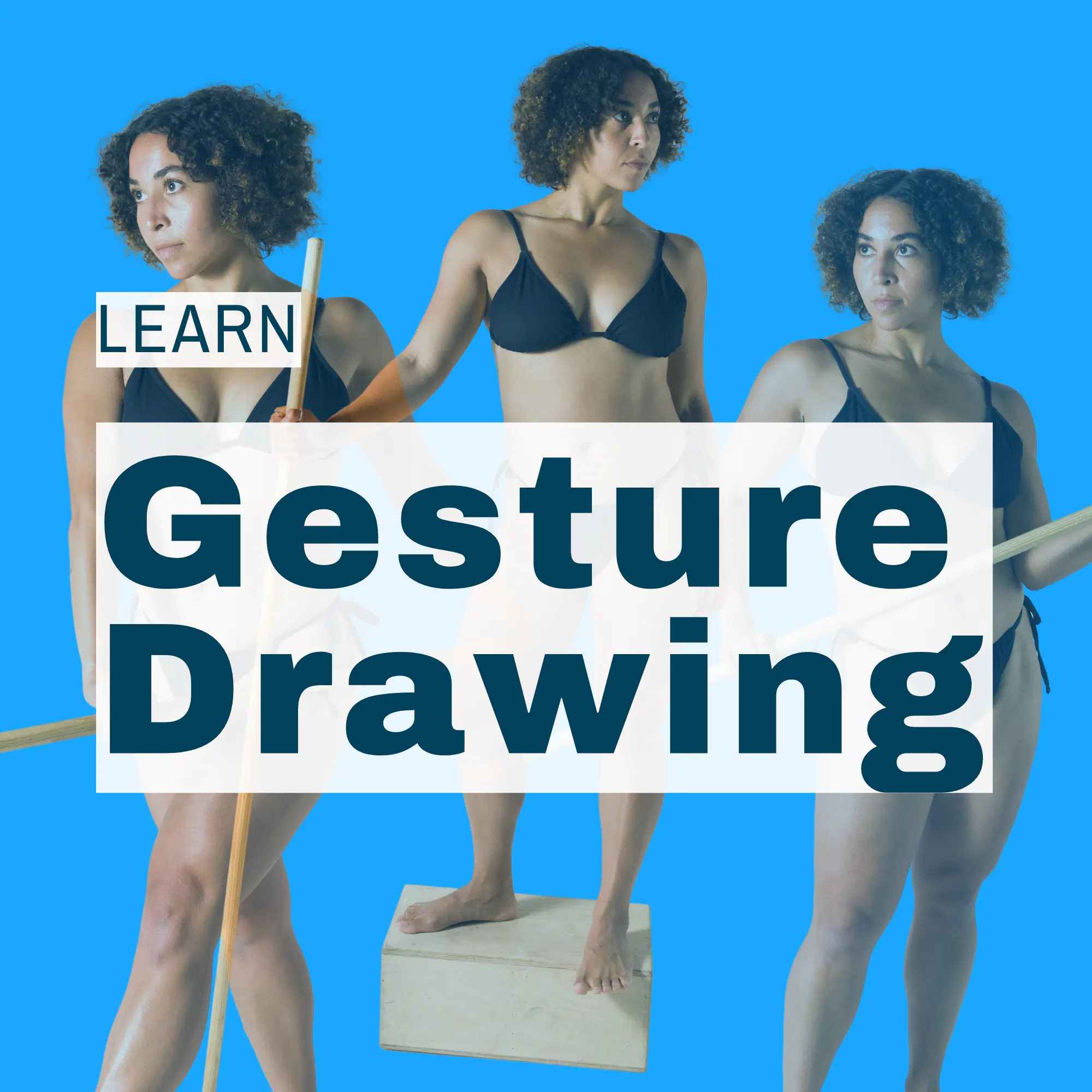
Gesture Drawing Path hero artwork with guided practice text

Hub for all gesture drawing guides, drills, and practice references.

Intro to Drawing
Intro to Drawing hero artwork

Foundational lessons to help you start drawing with confidence and consistency.

Mastering Linework
Mastering Linework hero artwork

Build cleaner strokes, stronger line confidence, and better control of line weight.

Browse by Topic

Getting Started

Practice Tips

Gesture Drawing Path
Hub for all gesture drawing guides, drills, and practice references.
Follow a clear sequence for movement-first practice and use linked resources as you progress.
Gesture Drawing Practice
A simple daily routine for capturing movement and flow.
Practice gesture with timed poses to build confidence without overthinking.
Using Axis Lines in Gesture Drawing
Use shoulder and pelvis tilts to add structure without losing flow.
Learn how simple axis lines help clarify torso direction, balance, and body orientation in gesture drawing.
Constructing the Head and Neck in Gesture Drawing
Simplify the head and neck without interrupting the gesture.
Learn how to place the head and neck in a way that supports movement, direction, and rhythm.
Constructing the Torso in Gesture Drawing
Build the torso around the gesture instead of against it.
Practice turning the rib cage and pelvis into simple forms while keeping the pose alive.
Drawing the Arms and Legs in Gesture Drawing
Connect the limbs to the main action without making them stiff.
Learn how to carry gesture through the arms and legs using simple directional lines and rhythm.
Drawing Hands and Feet in Gesture Drawing
Keep the ends of the figure readable without overworking them.
Learn simple ways to place hands and feet so they support the gesture instead of slowing you down.
Line of Action in Figure Drawing (Examples + Step-by-Step Guide)
Finding movement before detail.
Capture the primary flow of a pose and build gesture on top of it.
The CSI Method: C Curves, S Curves, and Straight Lines
A simple method for analyzing poses with curves and straights.
Learn how C curves, S curves, and straight lines help simplify complex poses and make gesture drawing easier to read.
Line of Action Examples for Figure Drawing
15 visual line of action pose breakdowns.
A collection of side-by-side pose references and simplified gesture lines to help you see movement, balance, and flow.
Common Line of Action Mistakes
Common beginner errors and how to correct them.
Learn why lines of action often feel stiff, disconnected, or overworked, and how to fix those problems in gesture drawing.
How to See the Line of Action Quickly in Any Pose
Observation habits for finding pose flow faster.
Learn how to simplify complex poses, spot dominant movement, and use a quick observation routine before you draw.
Line of Action vs Contour Drawing
Understand how movement-first gesture and contour structure work together.
Learn when to use each approach and how combining both improves flow, structure, and form.
Gesture Drawing vs Figure Drawing
Understand the difference between gesture drawing and figure drawing, and learn how to use both to build a balanced daily practice.
Gesture drawing focuses on movement and flow. Figure drawing focuses on structure and proportion. This guide explains the difference and shows how combining both leads to stronger, more consistent drawing practice.
How to Use Pose References Without Copying
Learn how to use pose references effectively while developing your own understanding of structure, movement, and proportion.
Using reference is not cheating. The key is learning how to study movement, structure, and proportion without mindlessly copying. This guide explains how to practice from pose references in a way that builds real drawing skills.
Figure Drawing Proportions and Structure
Build solid figures by understanding structure before detail.
Learn a simple way to approach figure drawing proportions and structure using timed poses. This guide focuses on building the body with basic forms so you can draw more confidently and consistently.
How Long Should Gesture Poses Be?
Choosing pose lengths for better gesture practice.
Learn what 30-second, 1-minute, and 2-minute gestures each train.
30-Second vs 2-Minute Poses
Understanding how short and slightly longer gesture poses train different drawing skills.
Learn when to use 30-second reactions versus 2-minute development in your practice.

Tools & Reference

How Pose Library Works

A short overview of why the tool exists and how it's meant to support daily practice.