Pose Library Studio is now available. Access the full pose library and custom sessions.
How to Find the Line of Action in Sitting Poses
Learn how to identify the line of action in sitting poses so your seated figures feel natural, balanced, and full of movement.
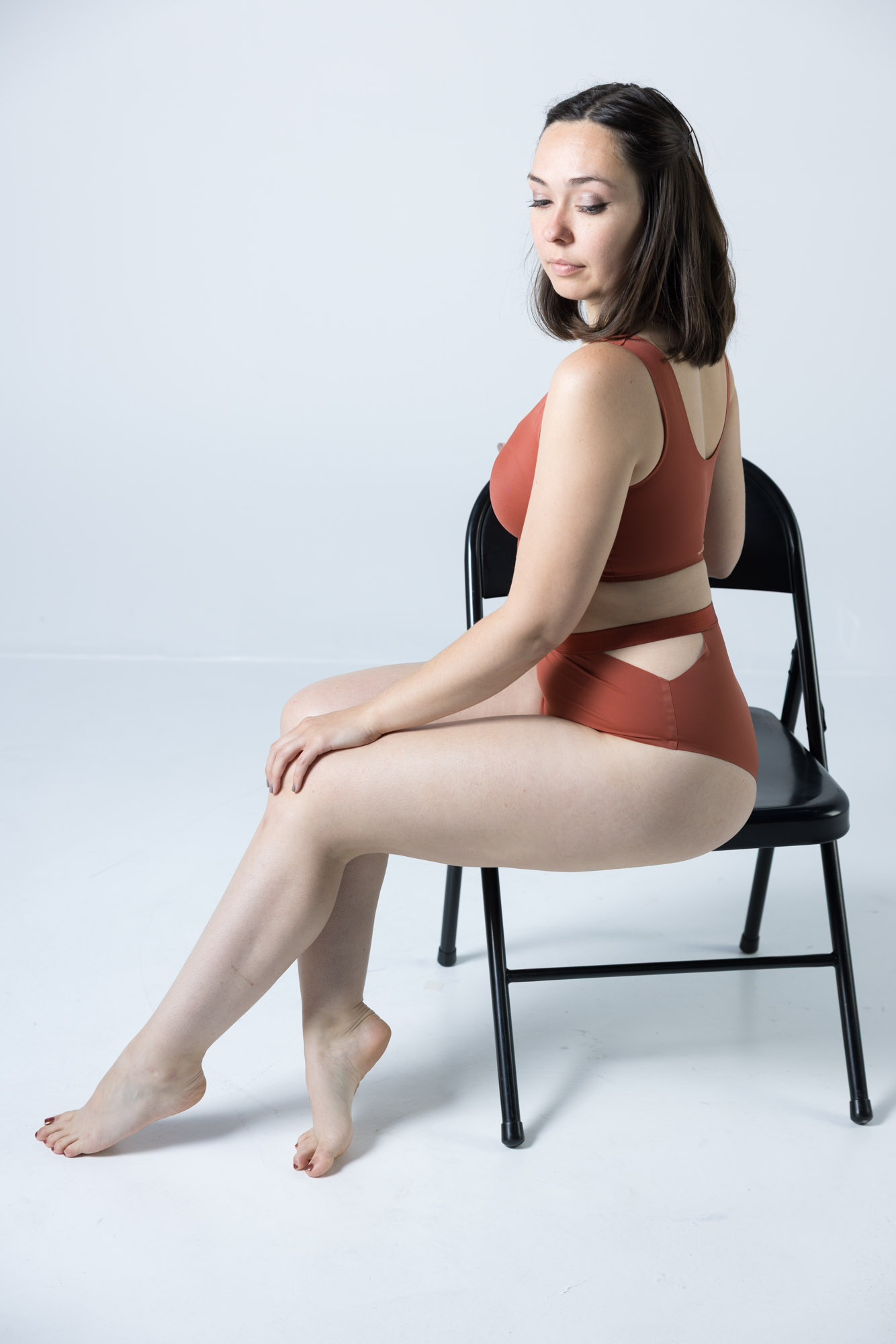
When artists first start practicing gesture drawing, standing poses usually feel easier. The movement is obvious. The spine curves. The weight shifts clearly from one leg to the other.
But sitting poses can throw people off. The body compresses, limbs overlap, and sometimes the legs seem to disappear behind the torso. Suddenly the line of action feels harder to see.
That is usually the moment when drawings start looking stiff. Instead of capturing movement, artists start solving anatomy problems too early. They draw the rib cage, pelvis, and limbs as separate blocks, and the energy of the pose disappears before the sketch even begins.
What helps is realizing something simple: the line of action is still there in seated poses. It just hides inside compression, overlap, and foreshortening.
Once you learn where to look, seated poses become much easier to approach. In many cases they are actually simpler than standing poses because the torso often moves in one dominant direction. This guide focuses on that first read: how to find the movement quickly before anatomy takes over.
If you are new to the concept, start with What Is the Line of Action in Drawing?. If you already know the basic idea and want to apply it to a specific kind of pose, seated figures are a great next step.
Find the line of action in seated poses
Focus on weight, compression, and balance
5 x 30-second poses
No signup required.
Why Sitting Poses Are Harder to Draw
One thing that surprises beginners is that sitting poses are often more simplified than standing poses. But that simplicity can make the gesture harder to recognize.
When a model stands, the body usually forms an obvious curve. The spine bends, the hips tilt, and the weight shifts onto one leg. The movement is easy to see. When someone sits down, that movement compresses.
The torso bends forward, the legs fold underneath the body, and the arms overlap the rib cage. Suddenly a lot of the structure is stacked on top of itself. Compression in the torso hides the gesture. Overlapping limbs block the natural rhythm of the pose. Foreshortening shortens parts of the body and makes proportions look strange at first glance.
All of that makes seated poses feel more confusing than they really are. Beginners often mistake compression for stiffness. They assume there is no clear line of action because the visible length of the spine is shorter. But the movement is still there. It is just less obvious.
Another problem is hesitation. In life drawing, seated poses often trigger a kind of panic. Artists start editing their drawing before it even begins. Instead of sketching the gesture, they slow down and try to solve anatomy and perspective at the same time. That usually leads to tight, mechanical drawings.
Gesture drawing works better when the first marks stay loose. The first line does not need to be perfect. It only needs to capture the direction of the movement. Once that movement is established, the rest of the figure becomes easier to build. If your drawings tend to lock up at this stage, compare them against common line of action mistakes.
How to Find the Line of Action in Sitting Poses
One question helps more than almost anything else: What strikes me first about this pose?
Not anatomy. Not proportions. Just the overall movement. Maybe the torso leans forward. Maybe the spine curves backward. Maybe the shoulders twist while the hips stay planted. That first impression usually reveals the line of action in sitting poses.
When I begin a gesture drawing, I look for the longest directional movement in the body. In seated poses that movement often runs from the head, through the spine, into the pelvis, and sometimes down toward the knee or toe. But it does not have to travel through every visible part of the figure to be useful.
Sometimes the legs are hidden. If the lower body is blocked by the torso or turned away from the viewer, I simply stop the line at the base of the spine. That still captures the essential movement of the pose. The gesture is not an anatomy diagram. It is a directional read.
Speed matters here. The line of action should be drawn within the first few seconds. If you wait too long, you start analyzing instead of seeing. That usually makes the movement harder to recognize. I prefer one continuous stroke, even if it wobbles a little. A loose line that captures motion is more useful than a neat line that arrives too late.
The biggest shift is mental. Instead of asking where the rib cage is, ask which direction the body is moving. That one change pushes your attention back toward movement. If you need help making that read faster, this guide on how to see the line of action quickly is a good companion.
Common Types of Line of Action in Sitting Poses
After drawing a lot of seated figures, you start noticing patterns. Most sitting poses fall into a few common line-of-action types.
C curve sitting poses are probably the most common. The body forms one dominant arc through the torso. You see this when someone leans forward, slouches, or relaxes into a chair. The spine curves gently and the head often follows that curve. These poses can look simple, but simple curves often create the most natural-looking drawings.
S curve sitting poses appear when the body twists. The shoulders may turn in one direction while the hips face another. That creates opposing curves through the torso. You see this a lot when someone sits sideways or shifts weight across one hip. The line of action usually snakes through the spine in an S-shaped rhythm.
Straight or compression lines show up in more upright seated poses. Someone sitting tall may appear almost vertical. Even then there is still directional energy. The line may run straighter from head to pelvis with subtle compression through the torso.
Recognizing these patterns makes seated gestures easier to spot. You do not need to memorize every possible pose. You only need to notice whether the body behaves more like a C curve, an S curve, or a straighter compressed line. That same simplification is what makes the CSI method so useful in gesture drawing.
Common Mistakes When Drawing Sitting Poses
One of the most common mistakes in seated figure drawing involves foreshortening. When a model leans toward or away from the viewer, parts of the body appear shorter than they actually are. Beginners often draw those limbs full length, which stretches the pose unnaturally and makes the gesture feel disconnected.
The line of action should account for that compression. It does not need to be mathematically perfect. It is simply a visual reminder that the body is shortening in space.
Another mistake is avoiding seated poses altogether. Some artists stick to standing references because they feel easier, but that slows improvement. Sitting and reclined poses teach a lot about compression, overlap, and weight. Those are important skills if you want gesture drawings to feel believable.
Another issue is ignoring weight and gravity. When someone sits, the body presses into the surface underneath. The hips carry most of the weight. The spine may compress slightly, the shoulders may relax downward, and the torso may lean into gravity. Those subtle cues are a big part of what makes a seated pose feel convincing.
The more you observe those effects, the better your first gesture line becomes. If your drawings keep feeling rigid, it often helps to simplify the read before adding structure. One strong action line and a clear sense of weight usually do more for the drawing than a careful block-in done too early.
Quick Practice Exercise for Sitting Poses
A simple exercise works very well here. Set a timer for 30 seconds per pose and draw ten seated gestures in a row.
During those sketches, only draw two things: the line of action and the spine. Nothing else. No rib cage. No pelvis block. No limbs.
At first this feels strange, almost like you are drawing too little. But that restriction forces your brain to focus on movement instead of details. After a few sessions, you start recognizing gesture much faster. Your eye becomes trained to search for motion instead of anatomy.
Refine seated poses with more time
Add structure and clarify how the body rests and leans
5 x 1-minute poses
5 x 2-minute poses
No signup required.
Timed pose tools and reference images work well for this because they let you cycle through many seated poses quickly. And speed matters. The faster you identify gesture, the more natural your drawings start to feel.
How Gesture Improves Seated Figure Drawings
Gesture is the foundation of figure drawing. Without it, drawings often feel stiff or mannequin-like. But when the line of action is clear, everything else starts working better.
Gesture helps simplify complex poses, capture movement quickly, create more dynamic characters, improve storytelling, and speed up life drawing sketches. Seated poses especially benefit from strong gesture because once the line of action is clear, the rest of the figure becomes easier to organize.
The torso, hips, and limbs naturally align with that movement. Weight distribution makes more sense. The pose starts to feel unified instead of built from disconnected parts. Over time you begin spotting gesture almost instantly, even in everyday scenes like someone leaning on a bench or looking at a phone on the train.
That is the point where seated poses stop feeling awkward. They start feeling alive.
Finding the line of action in sitting poses takes practice, but once you know where to look it becomes much easier. Start with the gesture, trust the first movement you see, and let the rest of the figure grow around that decision.