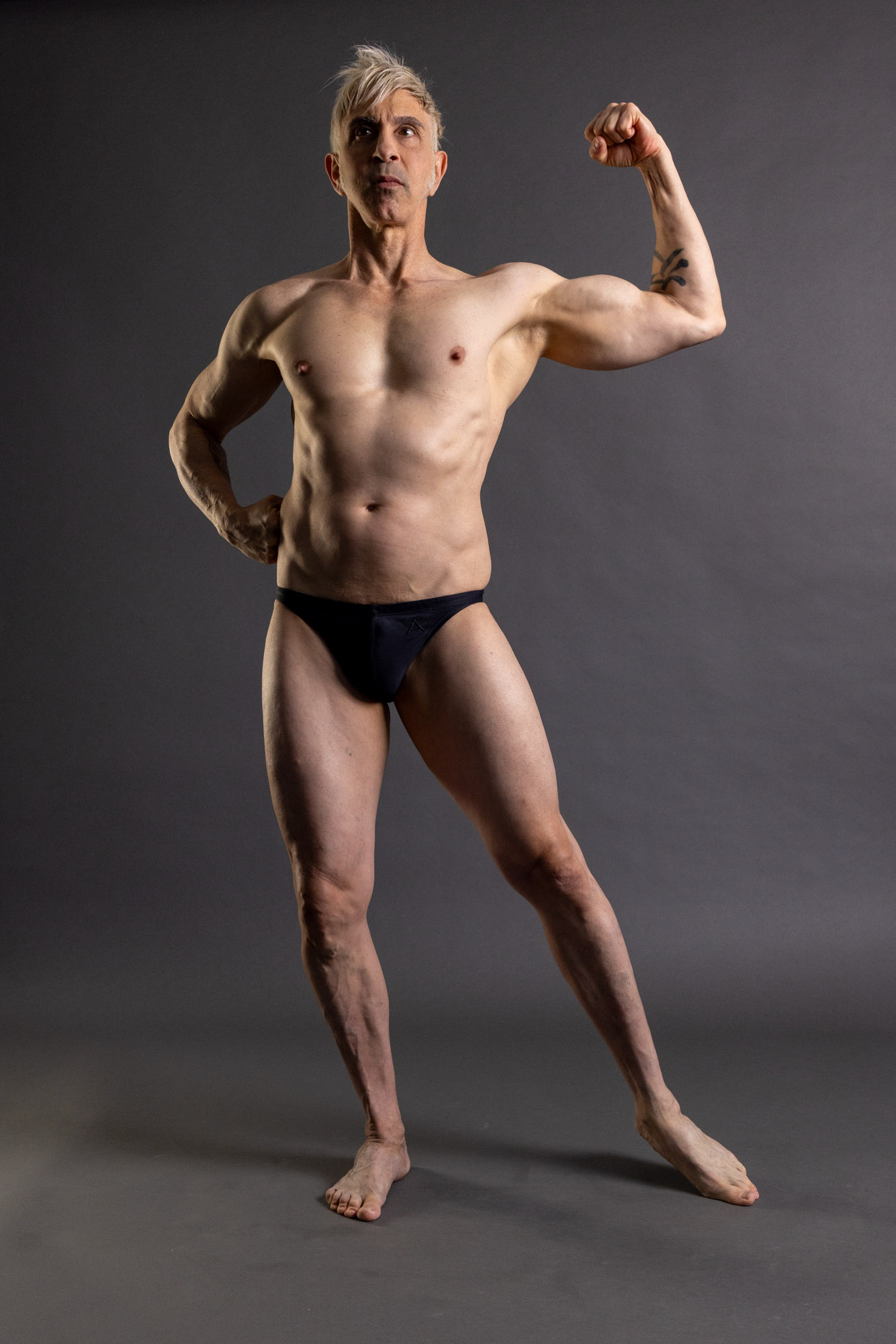
Resources / Line of Action Examples for Figure Drawing
15 Line of Action Examples for Gesture Drawing
15 visual examples showing how to identify the line of action in different poses to improve gesture drawing and observation.
This article is for visual practice. It focuses on side-by-side examples so you can study pose flow quickly
without reading a full theory lesson first.
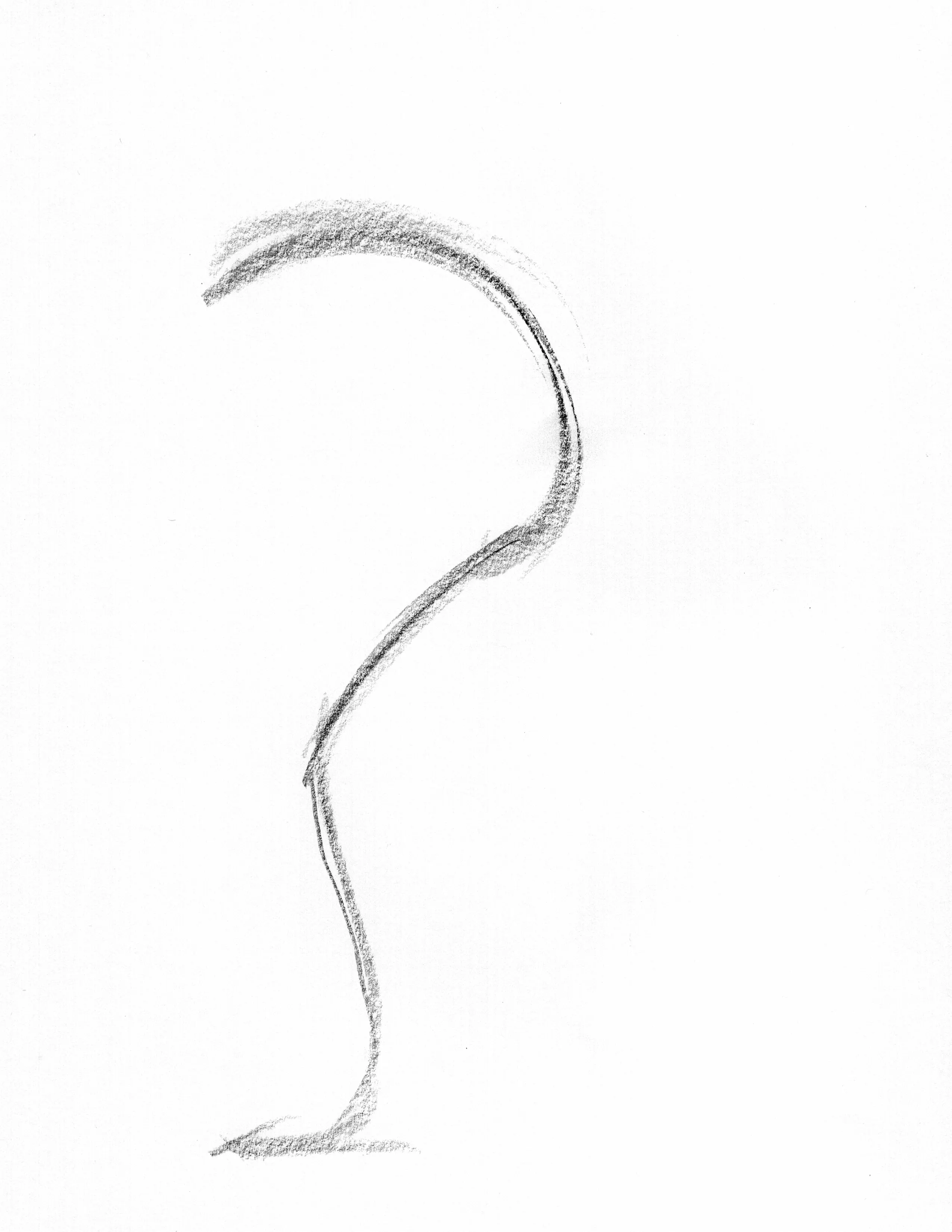
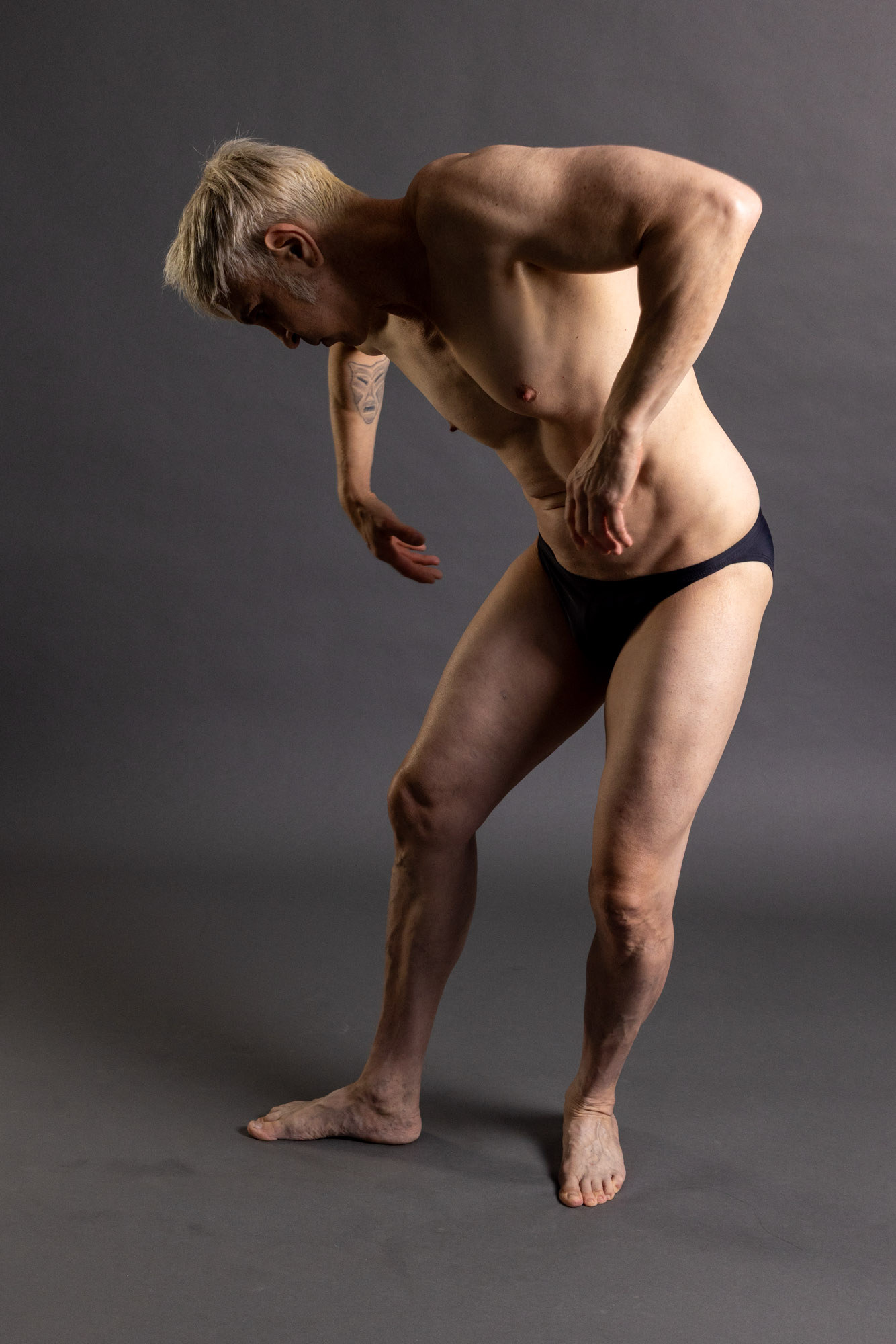
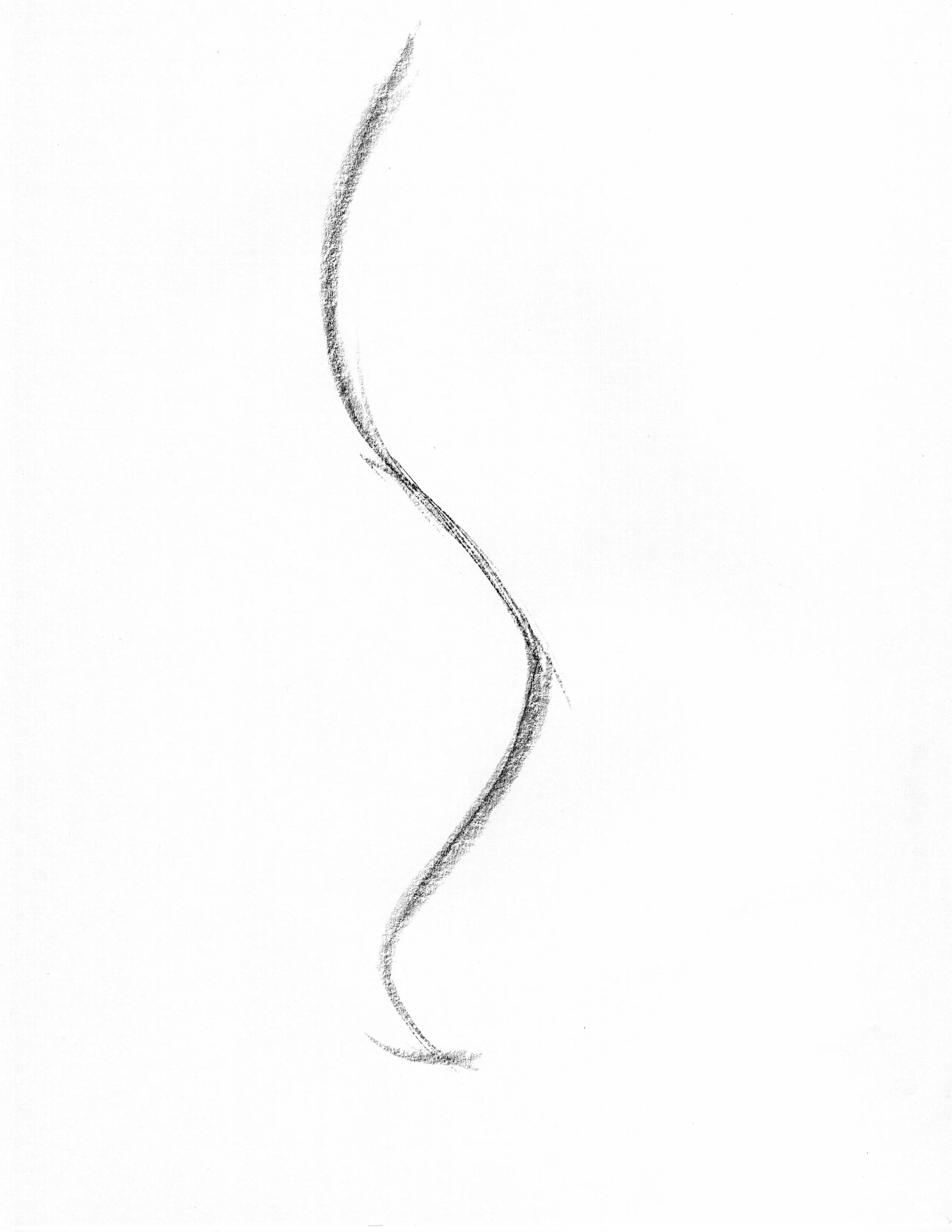
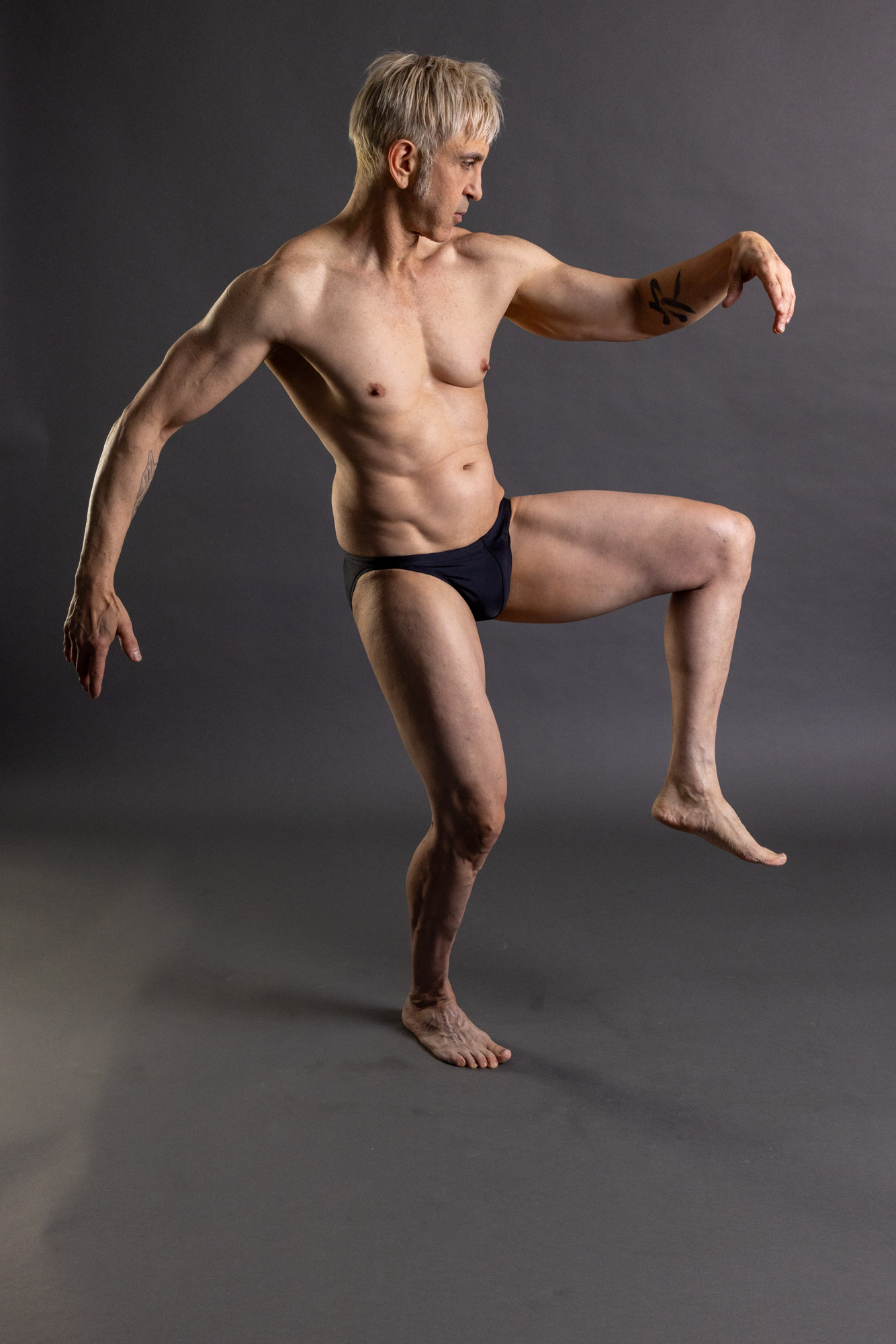
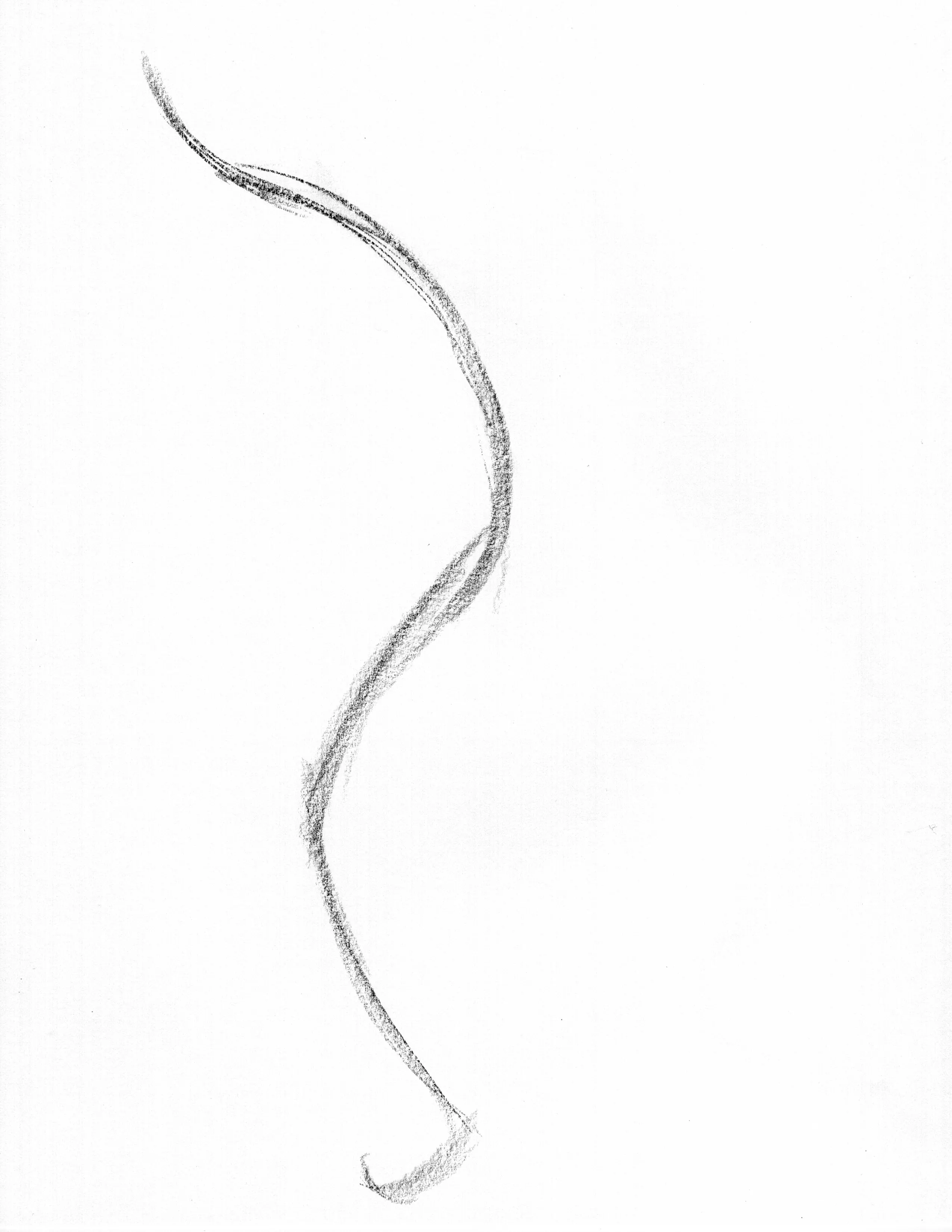
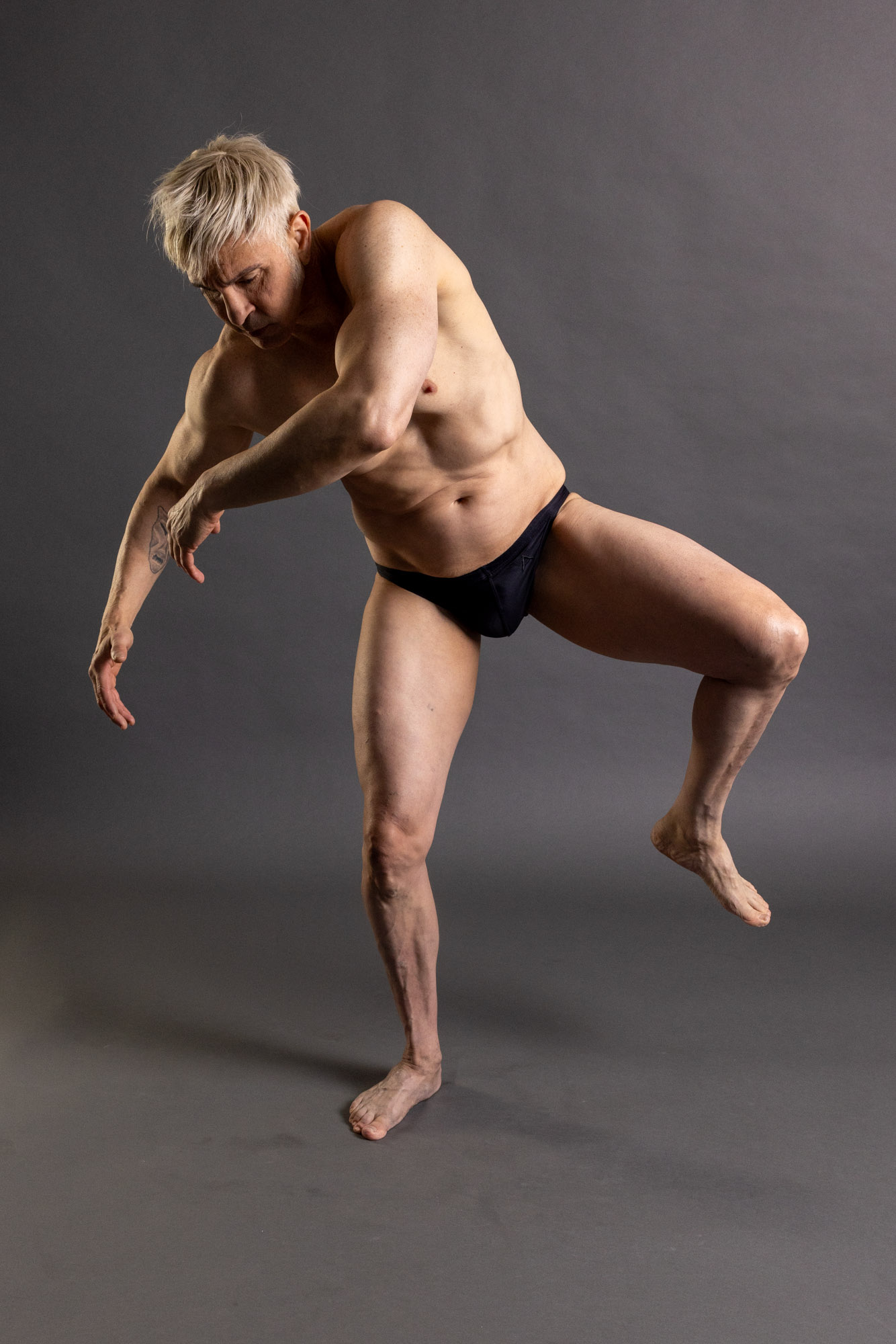
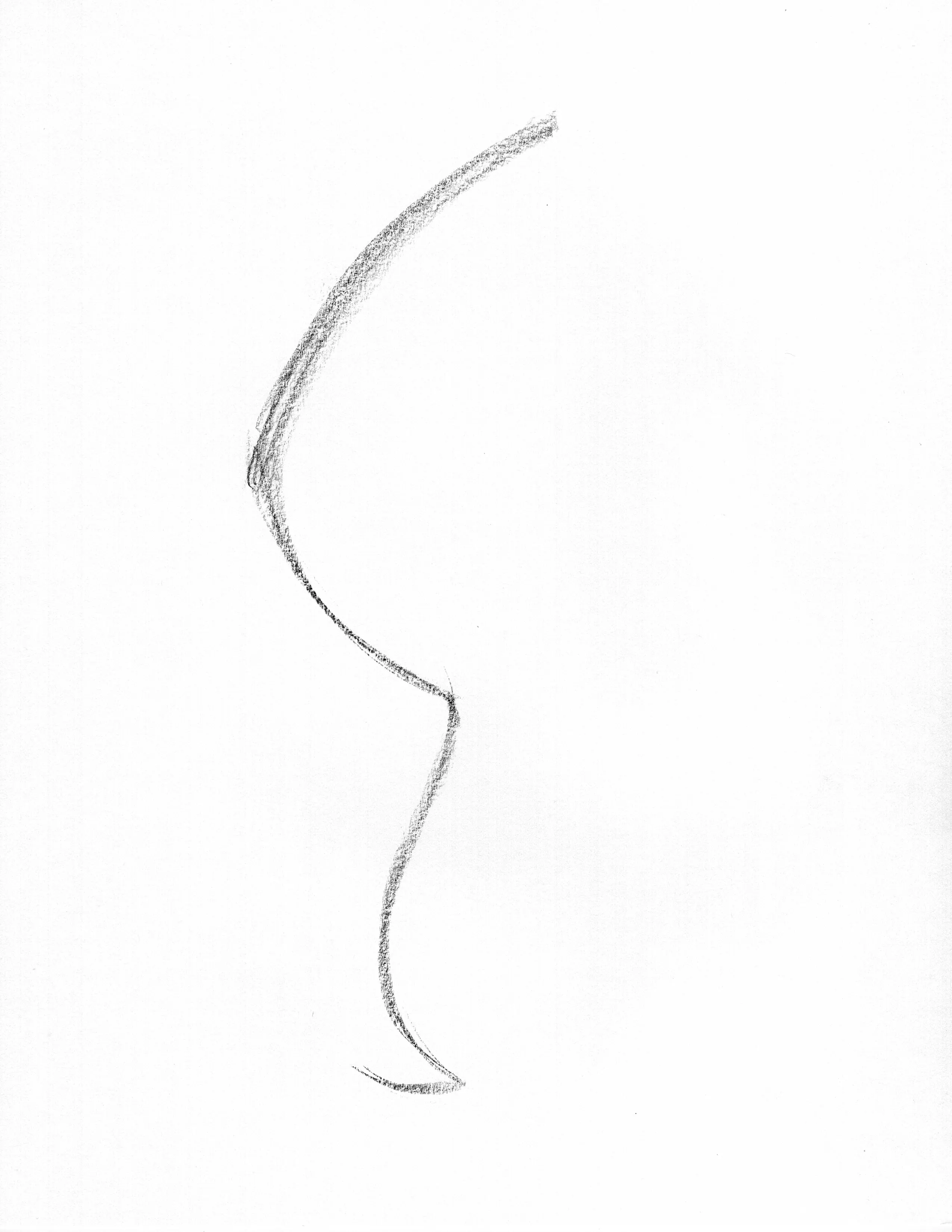
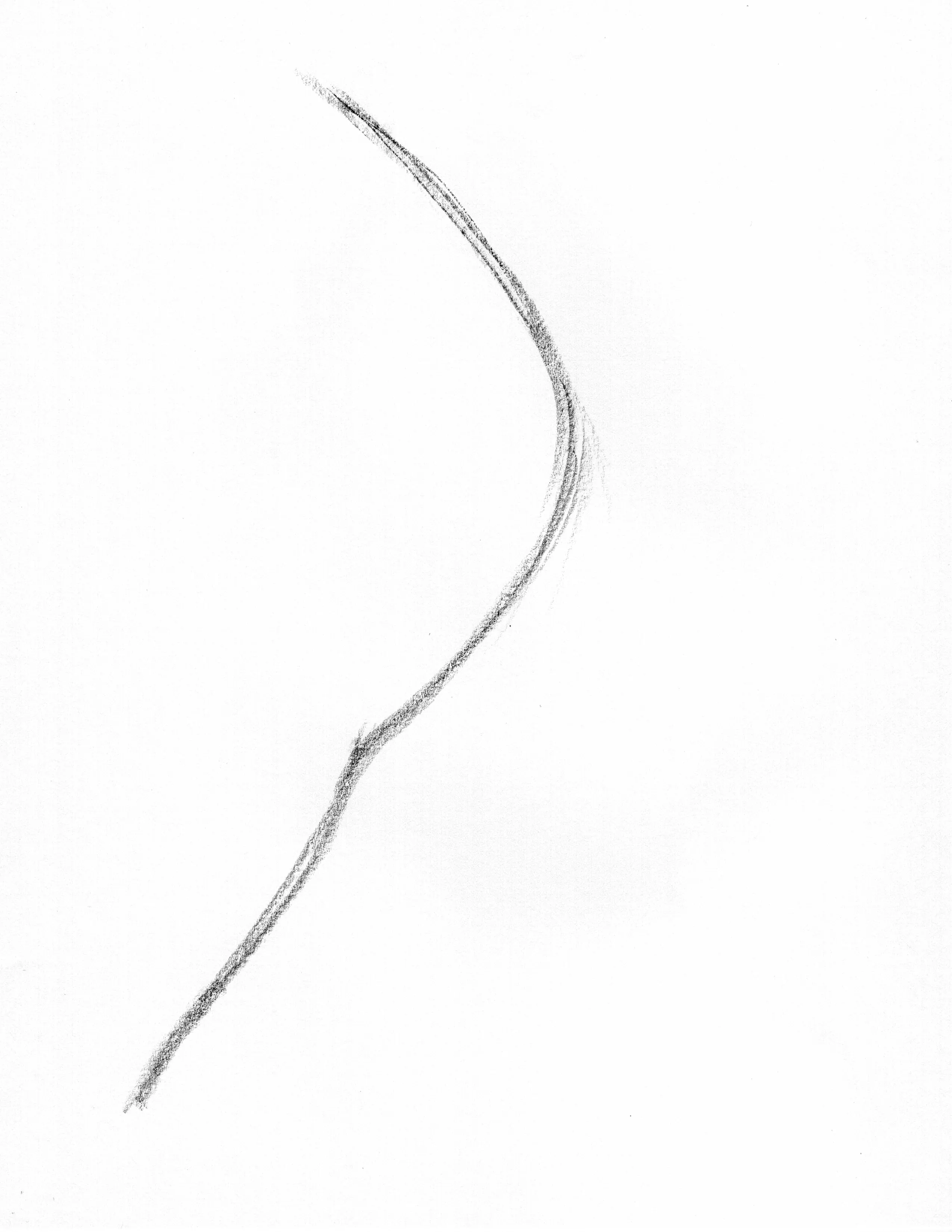
Each pose below is paired with a simplified gesture line that shows the primary movement of the figure. The
goal is not to trace the body, but to capture the overall flow and balance of the pose.
Studying examples like these can help train your eye to quickly recognize the gesture before worrying about
anatomy or detail.
Line of Action Examples
The line of action helps artists simplify the movement of the figure into a single directional gesture.
In the examples below, each pose reference is paired with a simple gesture line showing one way to interpret
the movement of the pose.
There is rarely only one correct answer. The goal is to identify the clearest flow through the body.
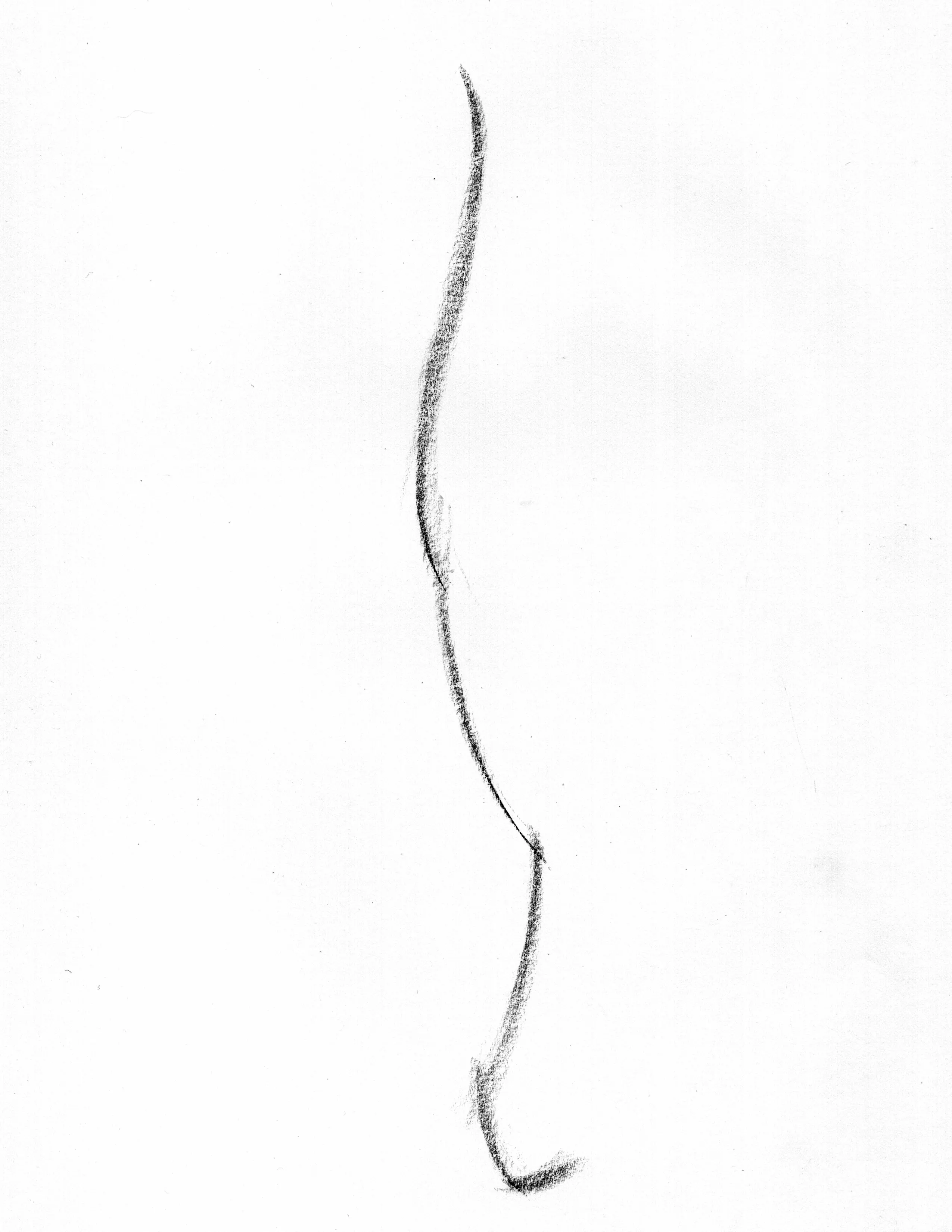
Example 01: Subtle S Curve Through the Body
Line of actionPose reference
Reference pose with a subtle line of action. The torso may appear mostly straight at first glance, but
there is still a gentle shift in the body. The gesture follows this slight movement from the head,
through the torso, and down into the supporting leg.
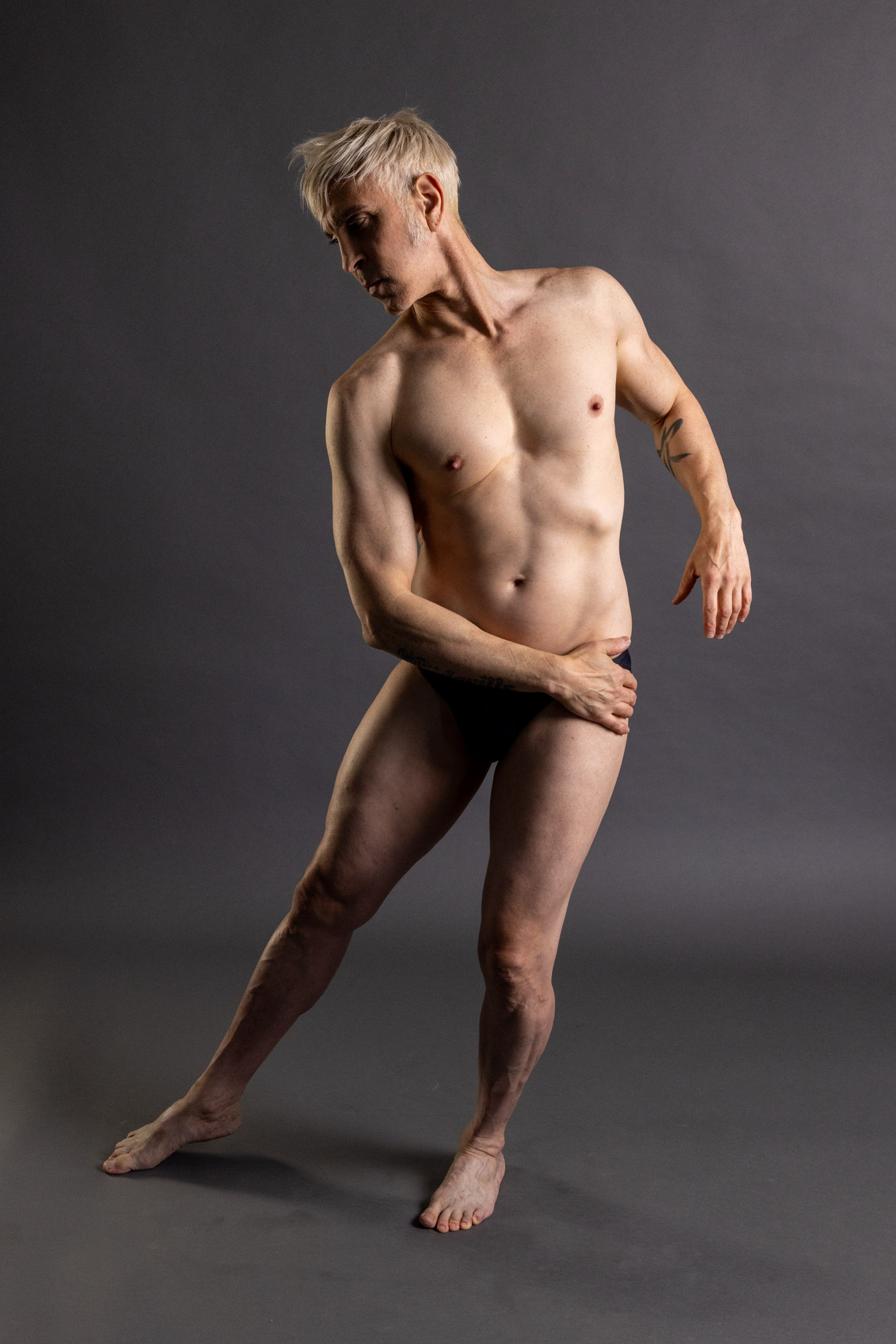
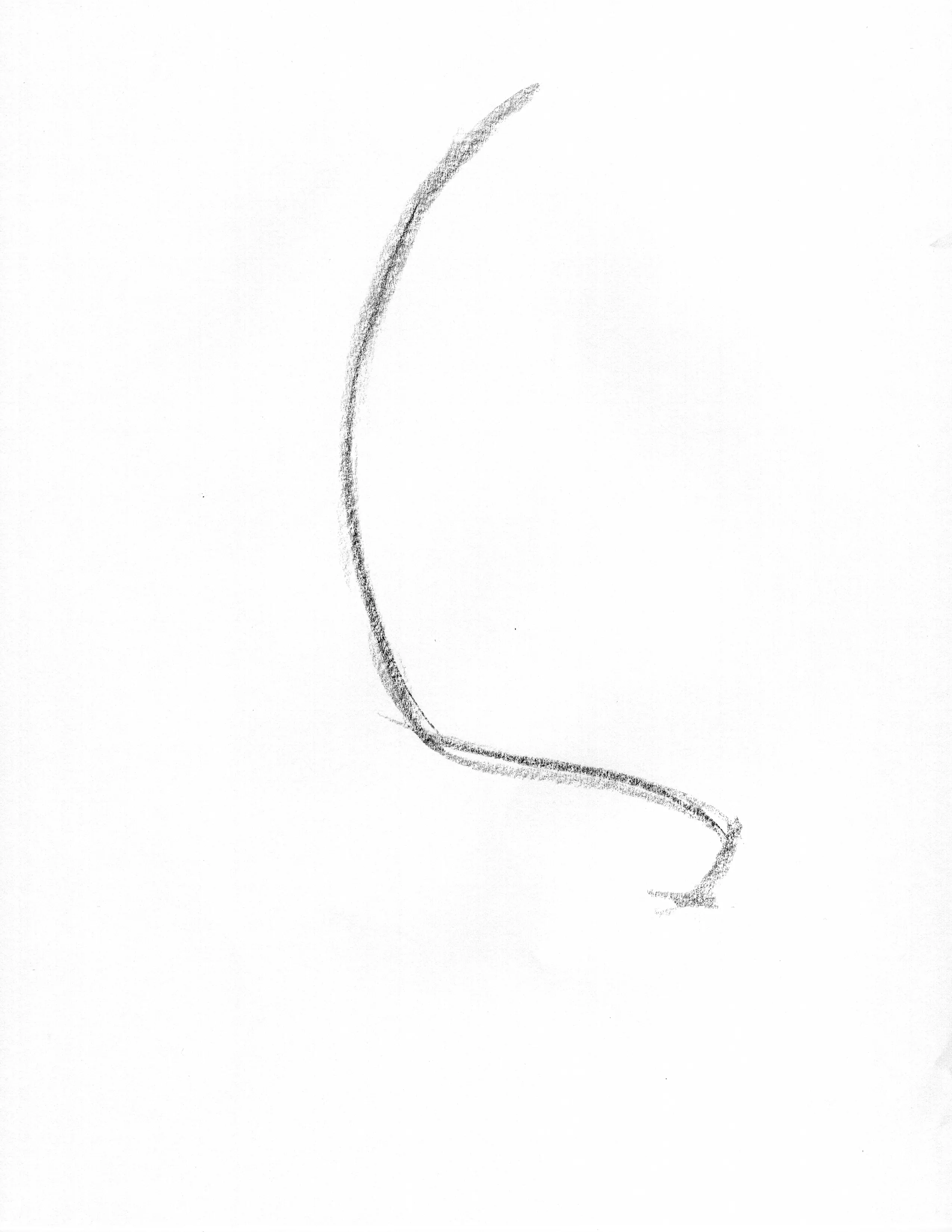
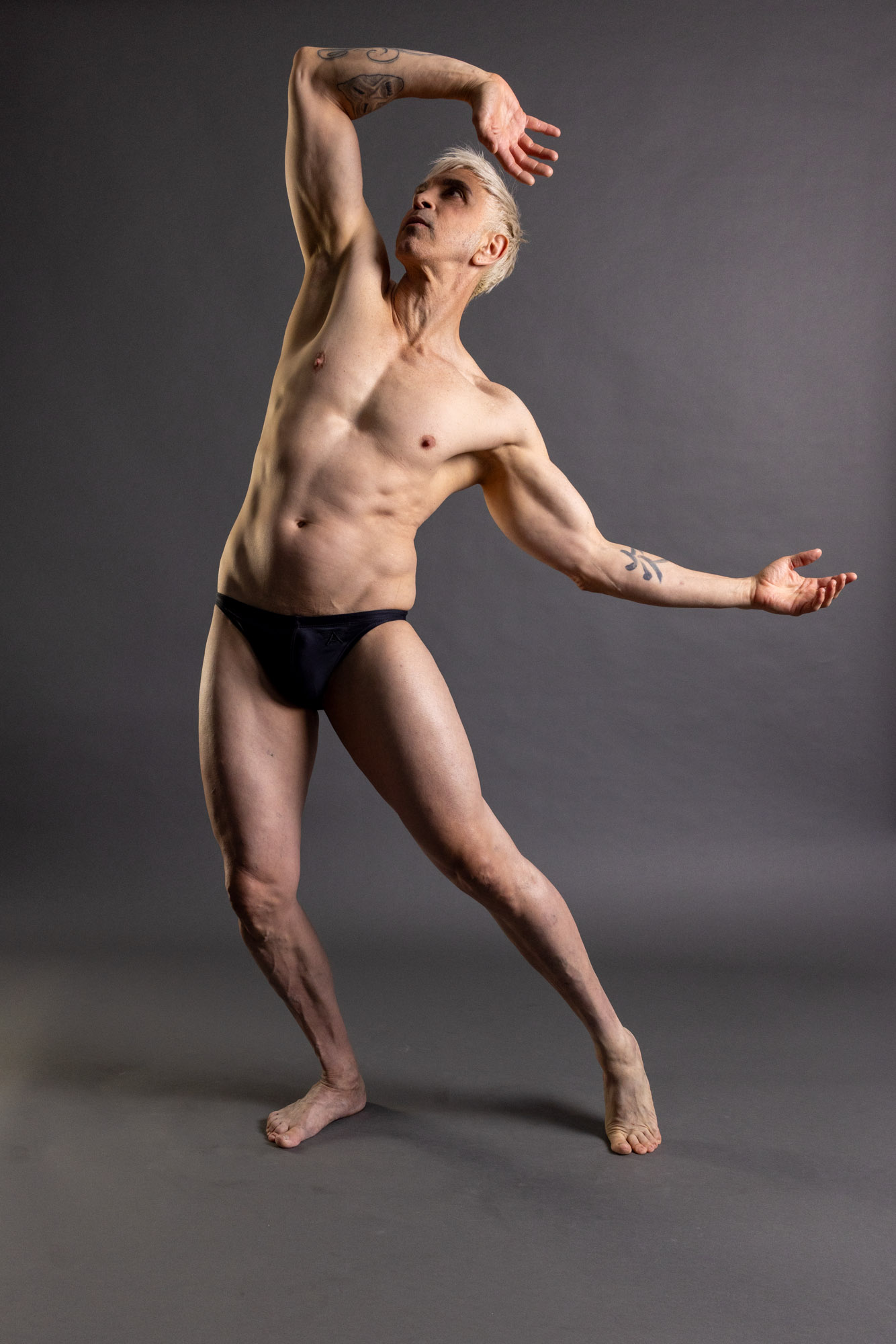
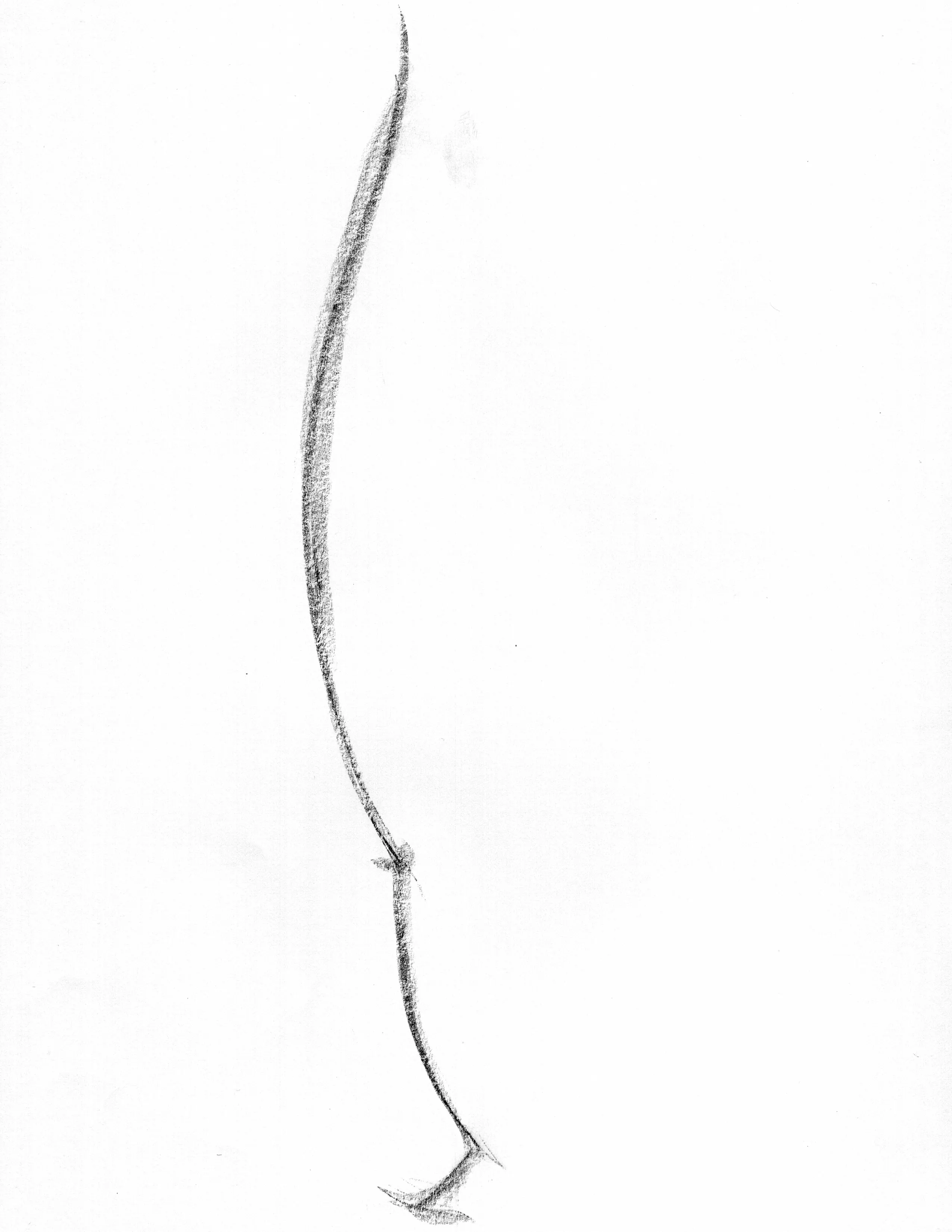
Example 02: Long C Curve With Opposite Leg Rhythm
Line of actionPose reference
This pose suggests a long C-curve through the body, with compression on one side and stretch on the
other. The line of action does not always have to follow the weight-bearing leg. In this case, the
opposite leg created a more interesting rhythm, so the gesture follows that movement instead.
Example 03: Upright Sweep Through Torso and Hips
Line of actionPose reference
The movement in this pose is more upright, but there is still a clear directional sweep through the
torso and hips. The line of action is kept simple, focusing on the overall movement rather than the
smaller details of the pose.
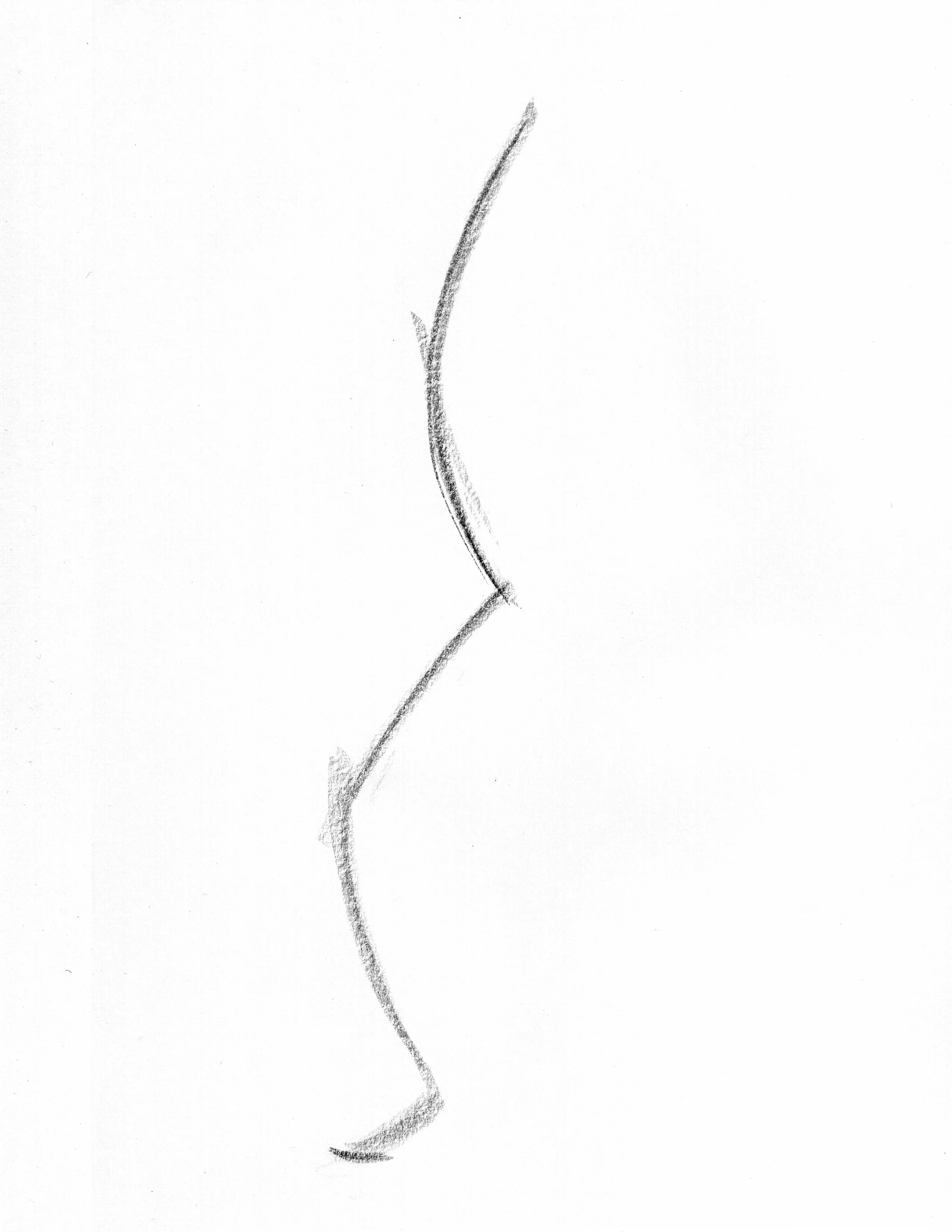
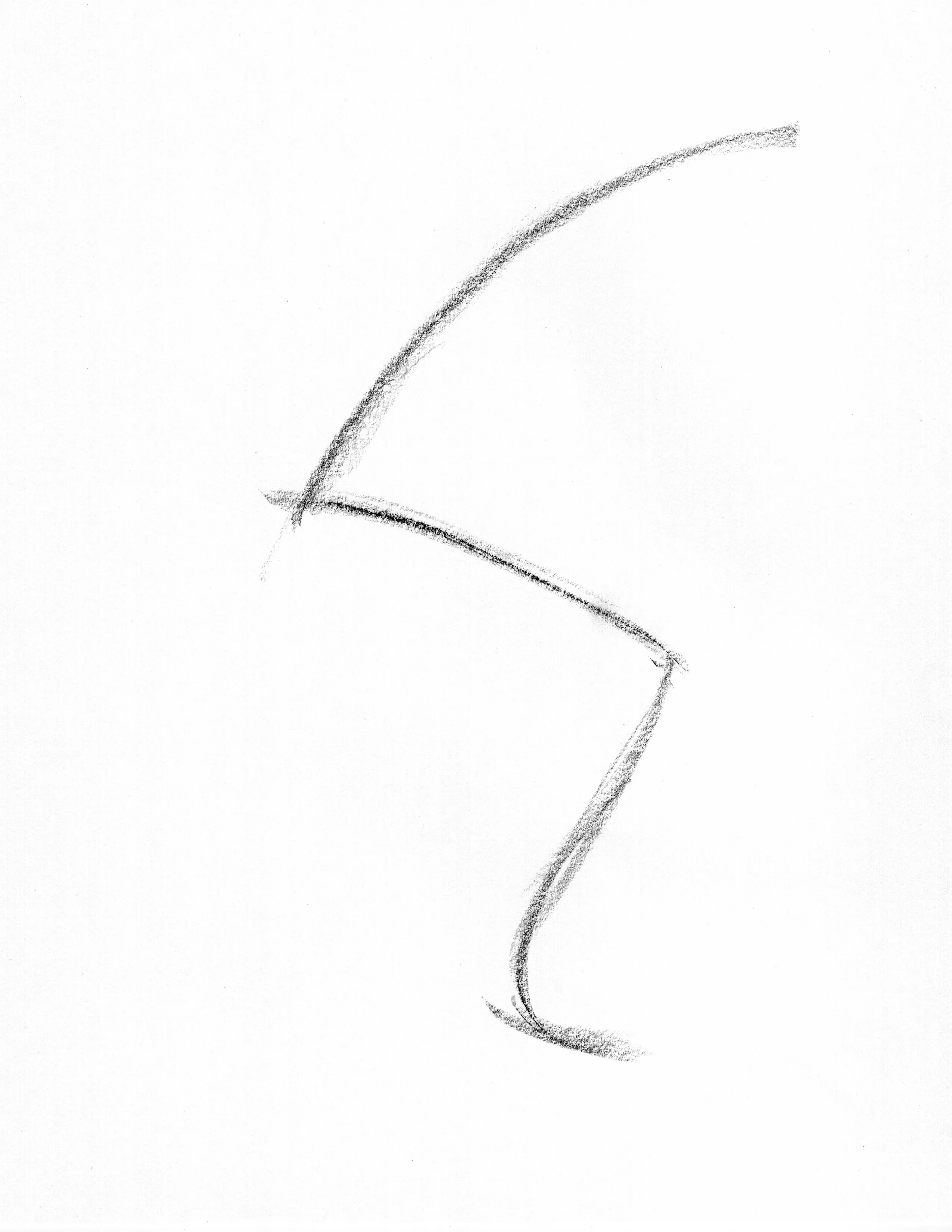
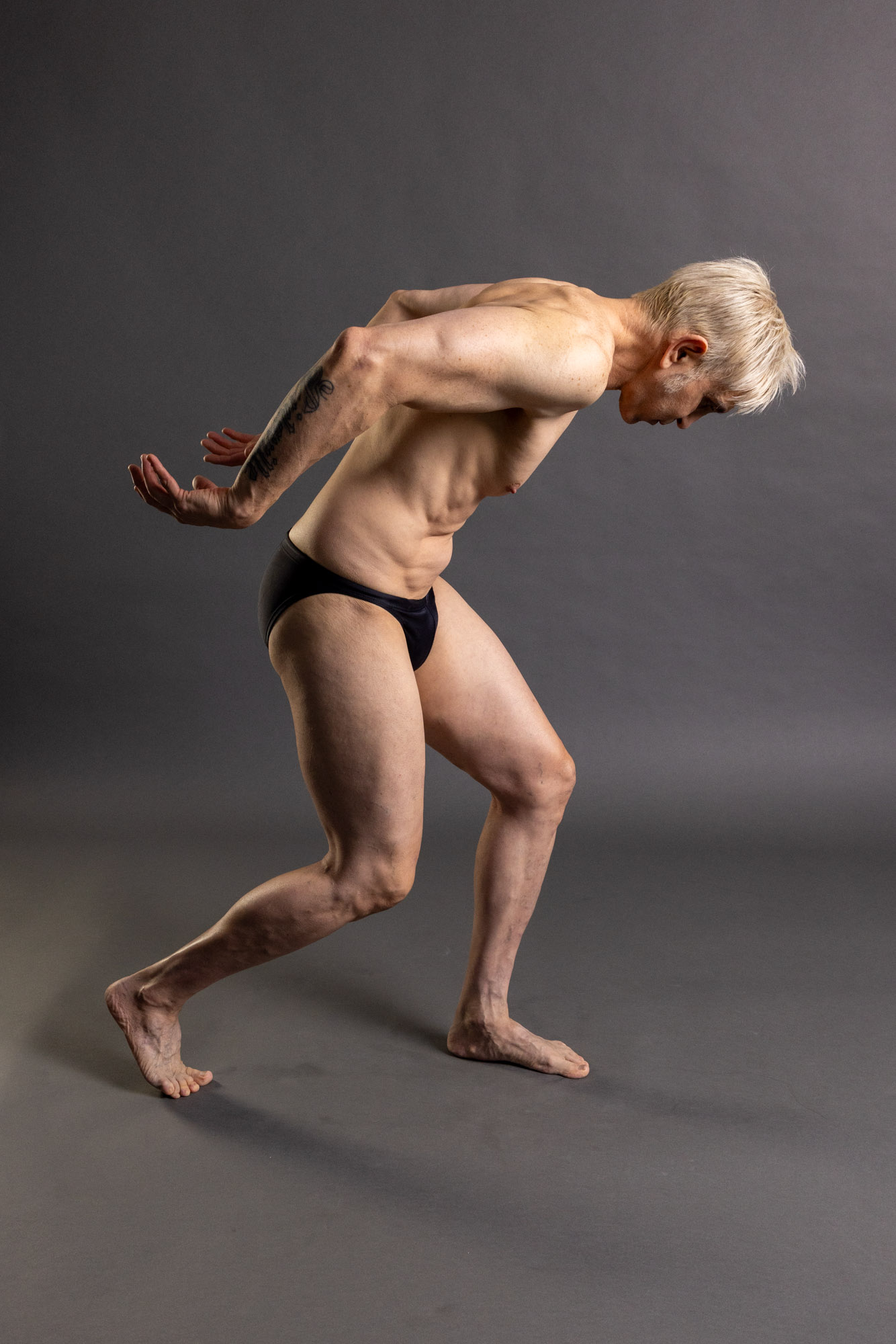
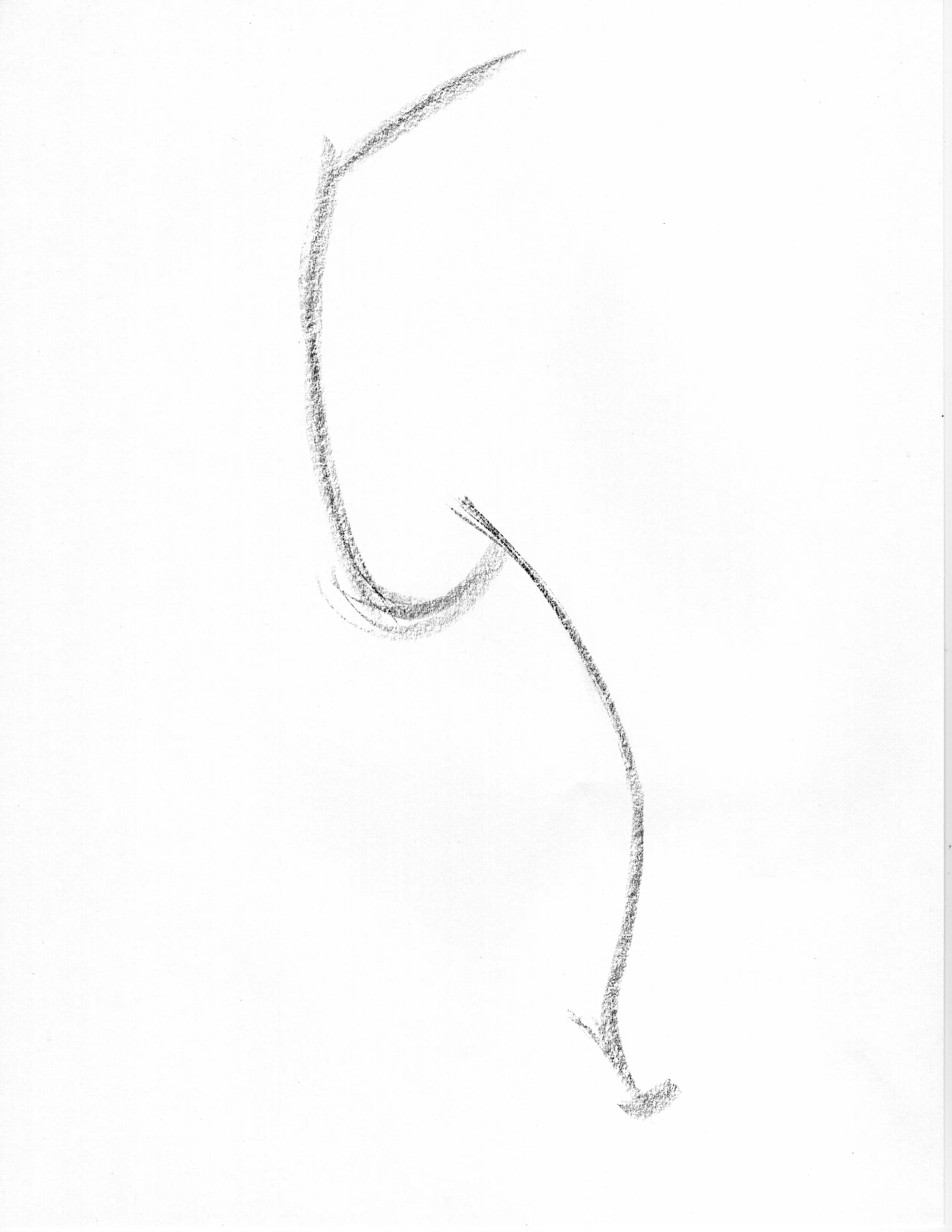
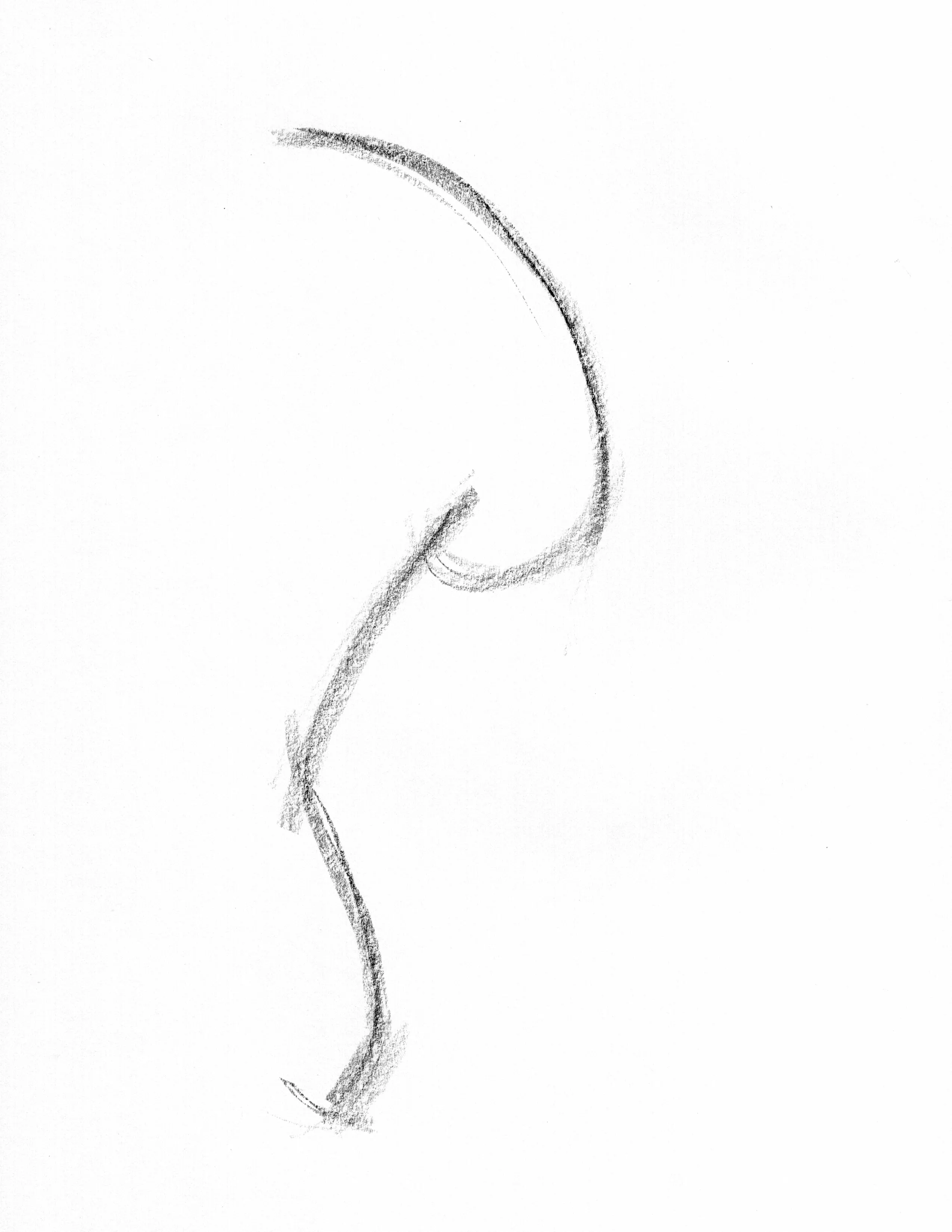
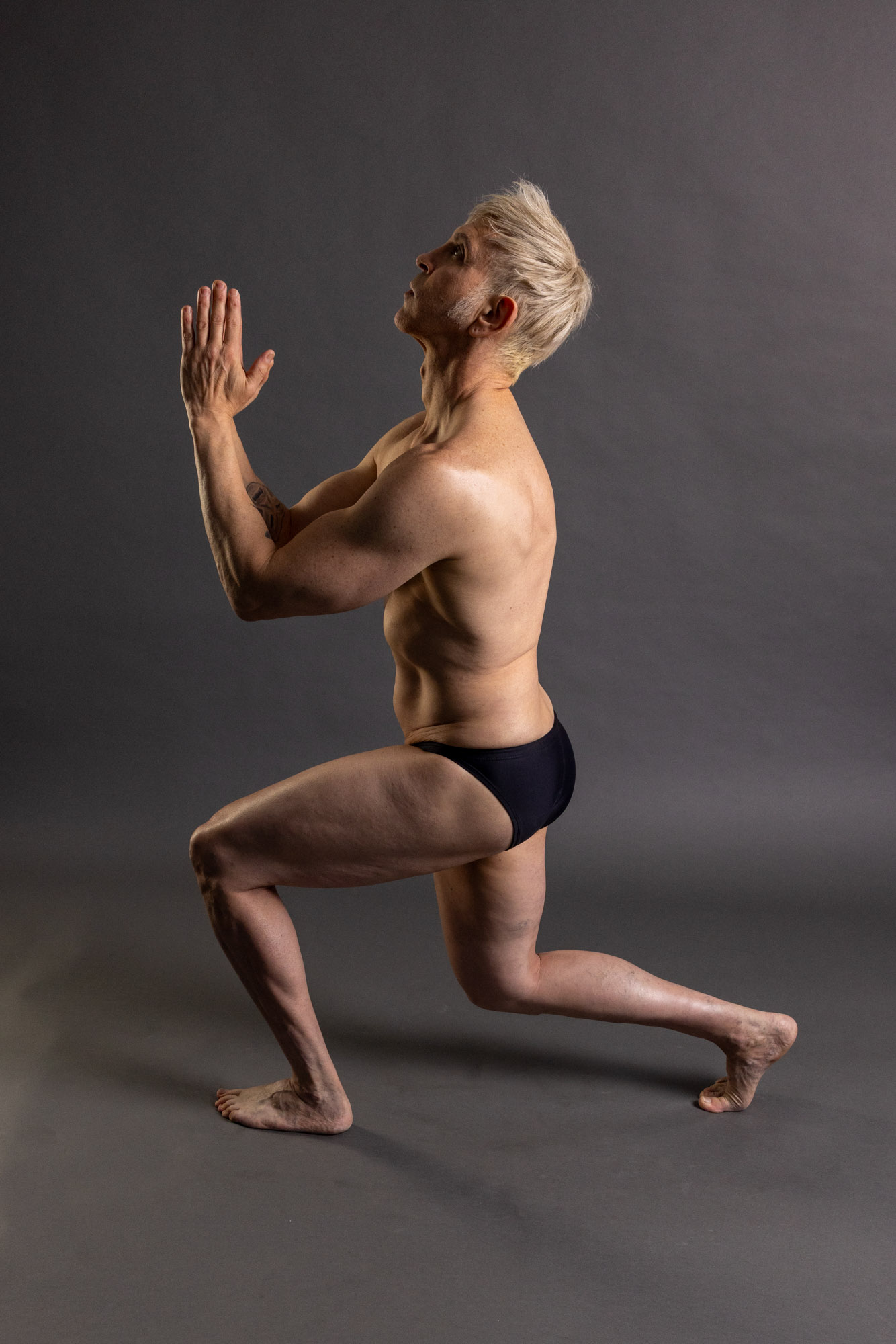
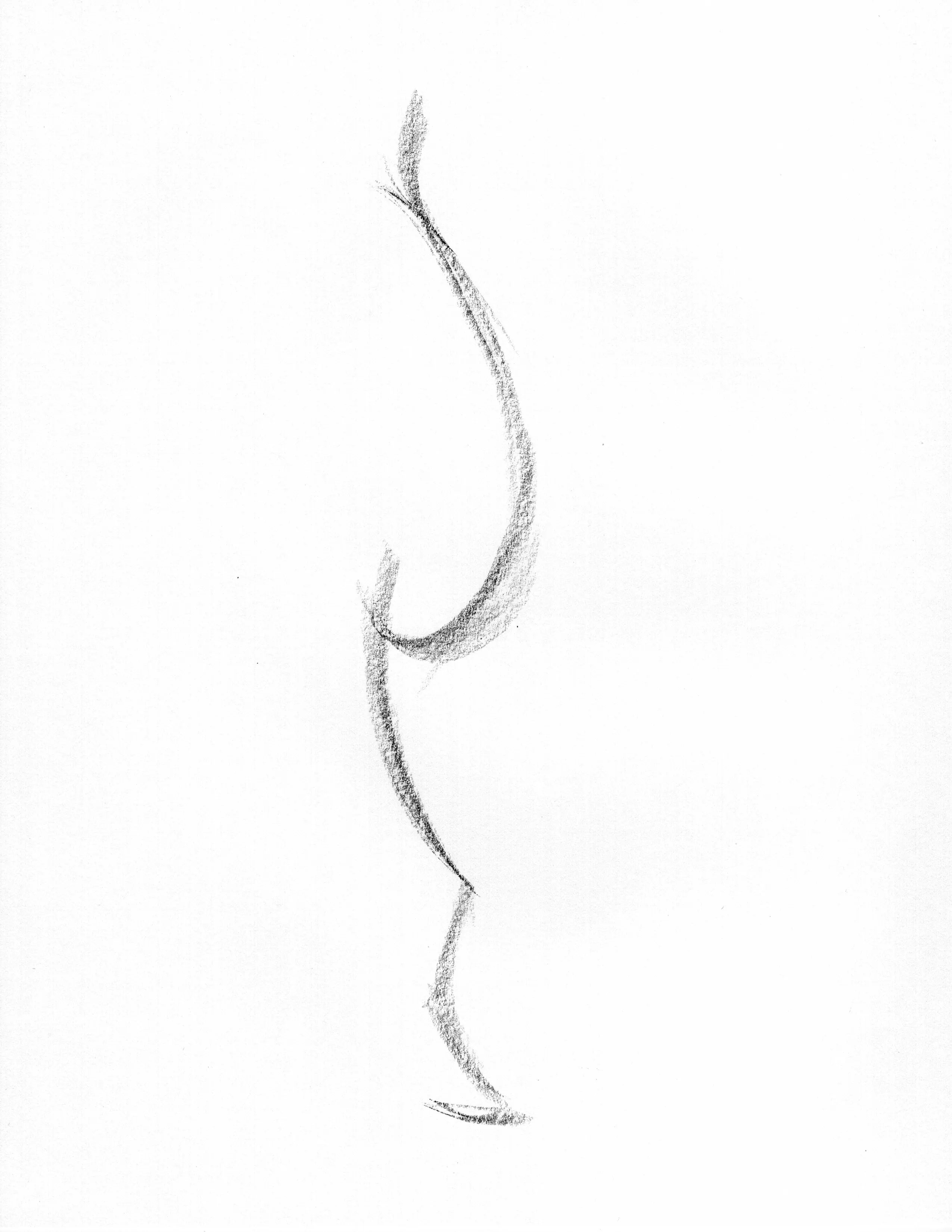
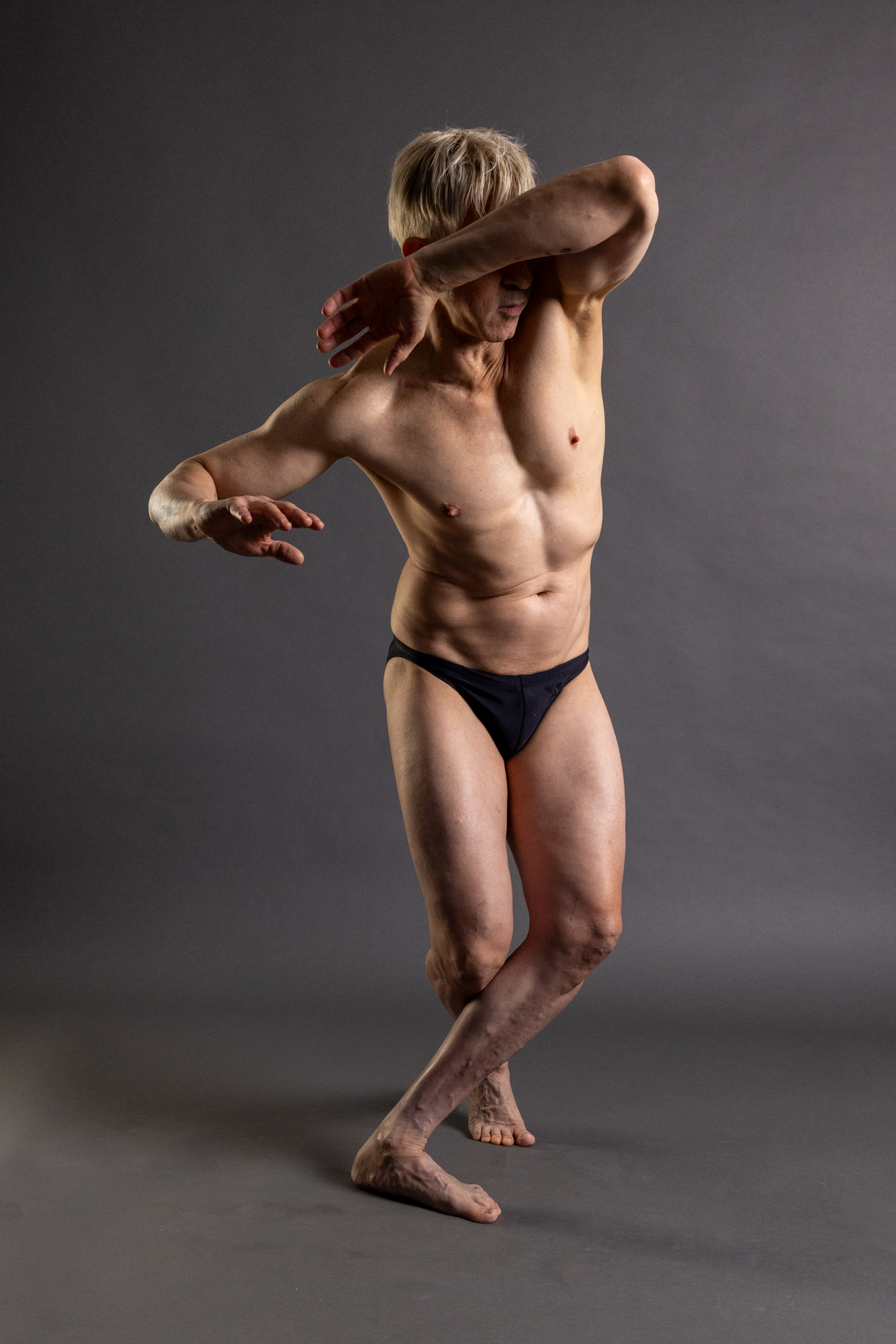
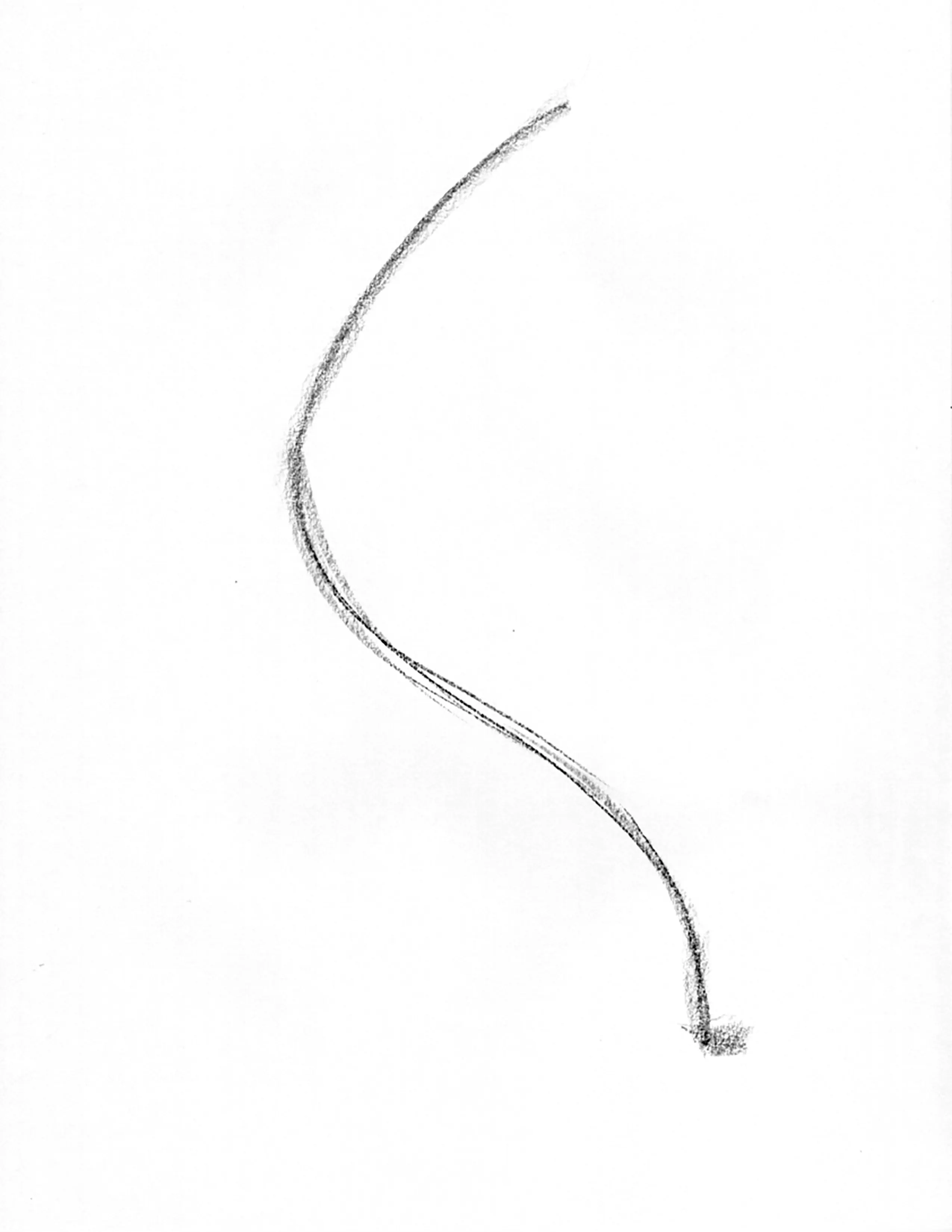
Example 04: Compressed Spring Zigzag Rhythm
Line of actionPose reference
This pose contains a lot of stored energy as the body compresses forward. Instead of a smooth curve, the
line of action follows a zigzag rhythm through the torso and legs, almost like a compressed spring. This
helps capture the tension and potential movement in the pose.
Example 05: Leading With the Non Weight Bearing Leg
Line of actionPose reference
In this example, the non-weight-bearing leg created the most interesting movement in the pose. That was
the first rhythm that stood out, so the line of action follows that direction instead of the supporting
leg.
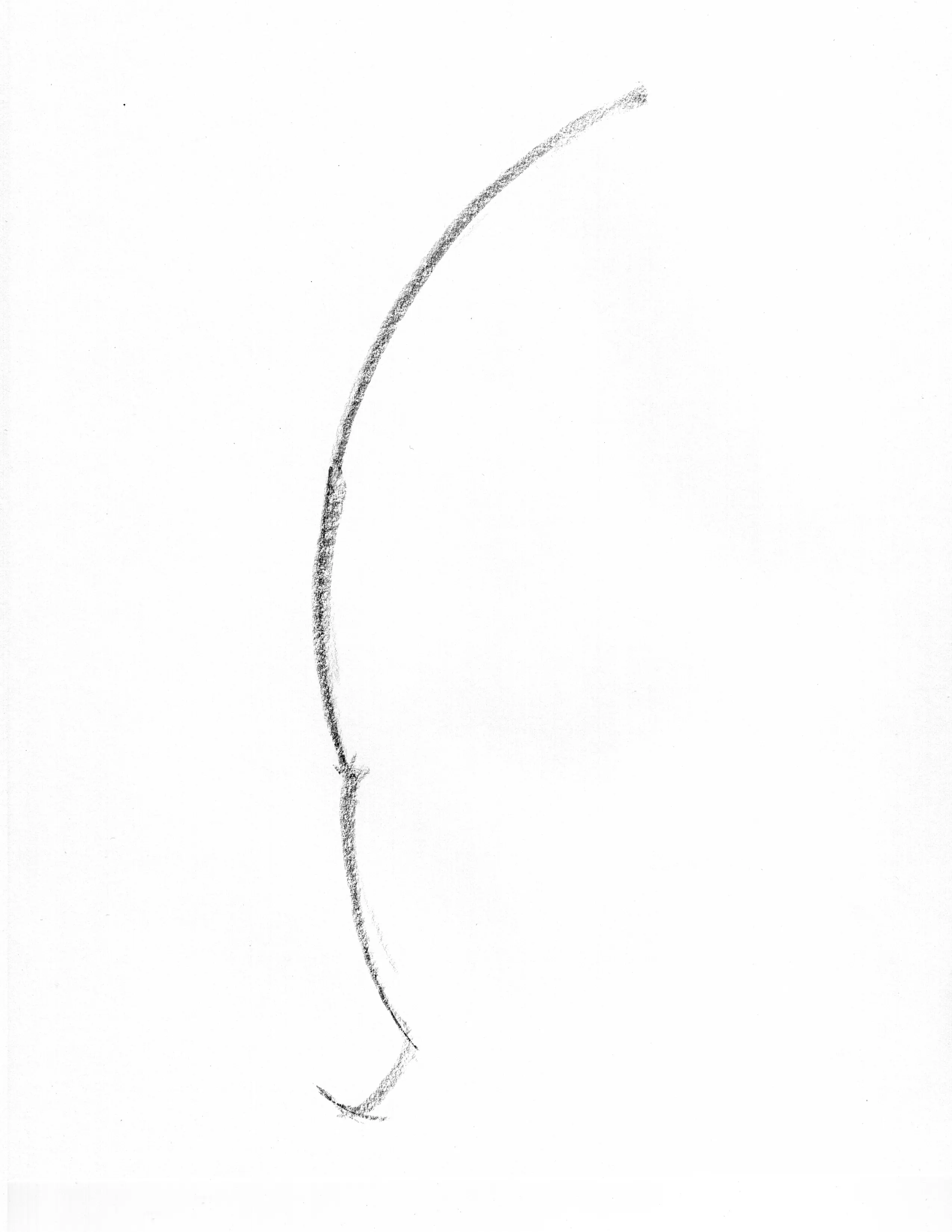
Example 06: Long Arc With Clear Directional Force
Line of actionPose reference
The body stretches into a long arc with clear directional force. The simplified line highlights that arc
without getting distracted by limb detail.
Example 07: Broad Forward Curve Through the Back
Line of actionPose reference
The body bends forward creating a broad curve through the back and shoulders. The line of action follows
this movement down into the legs, capturing the overall rhythm of the pose.
Example 08: Head to Foot Balance Alignment
Line of actionPose reference
In this pose, I wanted to keep the head aligned with where the lifted foot would land. Thinking about
that vertical relationship helps ensure the pose still feels balanced.
Example 09: Curve to Straight Transition
Line of actionPose reference
This gesture begins with a strong curve through the upper body before transitioning into a straighter
finish through the leg. I will likely continue refining this line as I work on it. In a later pass, I
would push the head slightly farther to the left, past the foot, to better reinforce the balance of the
pose. Gesture drawings often evolve through small adjustments, and it is perfectly normal if the first
pass is not exact.
Example 10: Strong C Curve Resolving Into the Legs
Line of actionPose reference
This pose creates a strong C-curve through the torso before resolving into the legs. The line of action
follows that continuous sweep, capturing the overall direction and compression of the body.
Example 11: Exaggerating the Hip Push
Line of actionPose reference
I was drawn to the way the hip pushes outward in this pose. I exaggerated that movement in the gesture
line to remind myself not to stiffen the pose as I continue developing the drawing.
Example 12: Upward Lift With Grounded Stability
Line of actionPose reference
This pose creates a strong upward lift through the torso while remaining grounded through the legs. The
line of action follows that lift and then resolves through the planted foot, helping unify the upward
movement with the stability of the stance.
Example 13: Center Sweep With an Alternate Front Leg Option
Line of actionPose reference
Even though there is no single correct line of action, this pass focuses on the sweeping movement through
the center of the body. On another attempt, I might choose to follow the front leg instead, since it
introduces an interesting change of direction that I did not notice at first.
Example 14: Rising Torso, Anchored Legs
Line of actionPose reference
The torso stretches upward while the legs anchor the figure to the ground. The line of action follows
this rising movement and then resolves through the base of the pose.
Example 15: Knee and Foot Stance vs Single C Curve
Line of actionPose reference
In this example I indicated the position of the knee and foot to help describe the stance. However, it
would also be perfectly valid to use a single sweeping C-curve from the head down to the foot to describe
the overall movement of the pose.
Practicing Line of Action
A helpful exercise is to look for lines of action outside of drawing sessions.
You can try identifying gesture in:
people walking
athletes in motion
trees bending in the wind
animals moving
Training your eye to see gesture everywhere will make it much easier to capture movement when drawing the
figure.